Skip to content
Neueste Updates

Nachrichten & Forschung

Bleiben Sie über die neuesten Robotik-Nachrichten, Branchen-Updates, Forschungsartikel und bahnbrechende Ankündigungen informiert.

13,521
Gesamtartikel
406
Nachrichten
13,110
Forschungsartikel
Täglich
Aktualisiert

Get email alerts for news & research

Available on Pro and Business plans

Upgrade for Alerts

Nachrichten & Forschung

Zeige 1411 von 13521 Artikeln

Being-M0.7: A Latent World-Action Model for Humanoid Robots

arXiv

arXiv:2610.11283v1 Announce Type: new Abstract: Humanoid loco-manipulation requires coordinated locomotion and manipulation informed by future scene evolution and whole-body motion, yet learning these capabilities is constrained by scarce robot demonstrations. Human video and motion datasets offer scalable supervision, but many contain only video or motion rather than paired video-motion data. Moreover, human motion does not directly specify executable robot actions. We present Being-M0.7, a latent world-action model that transfers visual-motion priors learned from mixed-modality human data to humanoid control through pre-training, robot mid-training, and action post-training. We curate a corpus from more than 10,000 hours of raw human-centric data, integrating video-only, motion-only, and paired video-motion streams to learn complementary visual dynamics and whole-body kinematic structure. Joint prediction of future latent visual states and motion encourages visual representations to
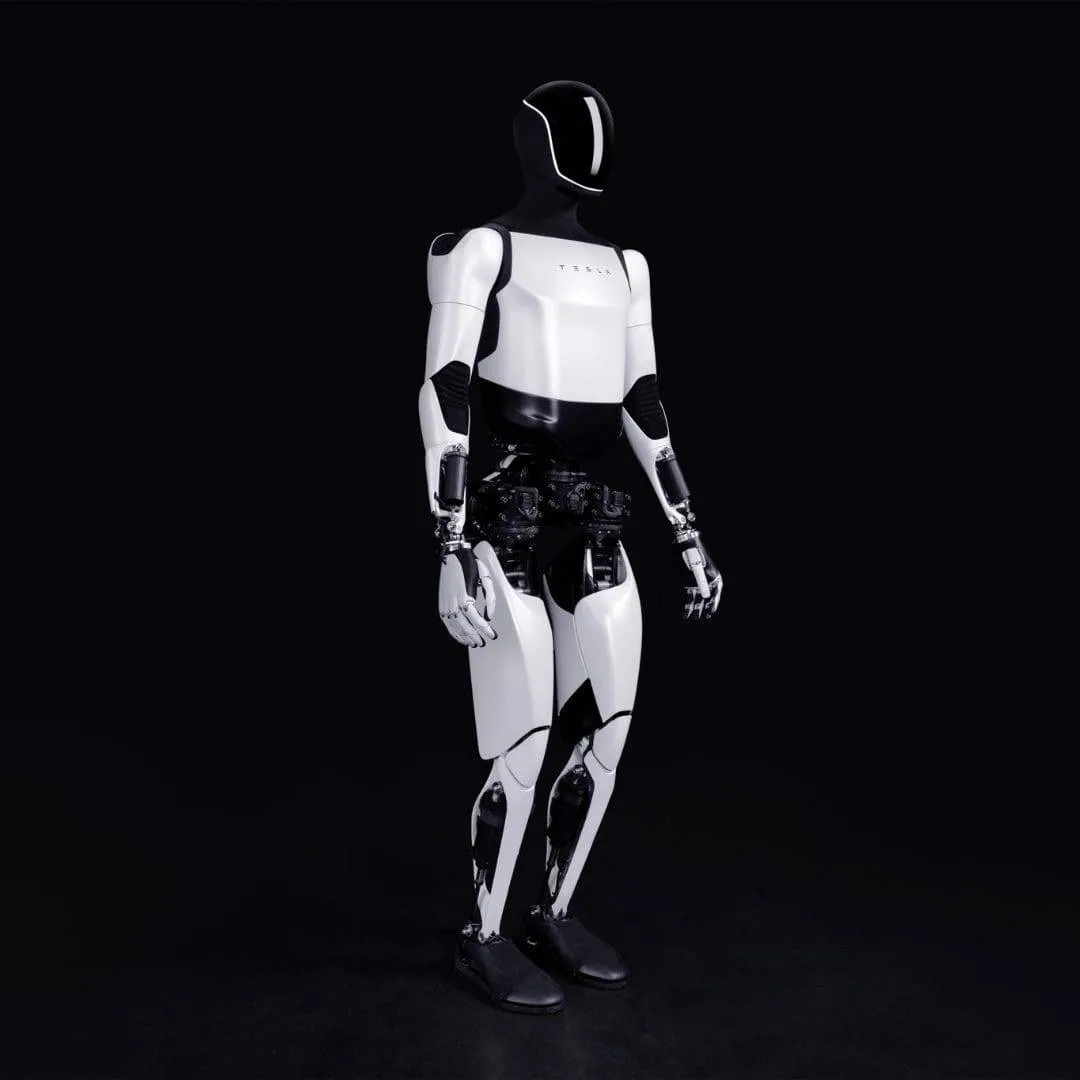

humanoidlocomotionmanipulationcontrol

SimVLA: Zero-Shot Sim-to-Real VLA Learning for Mobile Manipulation

arXiv

arXiv:2610.11248v1 Announce Type: new Abstract: Large-scale, diverse datasets have driven the success of LLMs and VLMs. But VLAs for robotics remain limited by the cost and complexity of real-world data collection. While simulation offers a scalable alternative, its potential for sim-to-real VLA learning in mobile manipulation remains largely underexplored. We introduce SimVLA, an end-to-end framework that trains VLAs entirely on synthetic simulation data without teleoperation for mobile manipulation. SimVLA is first pre-trained on two complementary simulation-derived datasets: SimAction, a large-scale robot action dataset spanning 35 diverse mobile manipulation tasks, generated by composing atomic skills, and SimVQA, which leverages privileged simulator state to provide spatial, geometric, and subtask-level visual-language supervision. We further post-train SimVLA on a mixture of SimAction and SimDeploy, a dataset collected from policy rollouts across diverse simulated environments. W

manipulation

SafeInferCom: Safe Inference-Time Compute via Verifier-Guided Mid-Generation Intervention for Robotic Task Planning

arXiv

arXiv:2610.11223v1 Announce Type: new Abstract: Large Reasoning Language Models (LRLMs) enable multi-step reasoning for robotic task planning, but continued reasoning can overwrite valid intermediate plans or leave constraint violations unresolved, reducing planning reliability and wasting inference-time computation. We develop an inference-time monitor that exposes and verifies intermediate plans without disrupting the original decoding trajectory. Building on this monitor, we propose SafeInferCom, a formal verifier-guided framework that preserves valid intermediate plans and directs error correction during generation. Experiments across multiple LRLMs and planning domains reveal reasoning-response inconsistency and limited self-correction under one-shot inference. SafeInferCom improves planning success and accelerates error correction relative to one-shot inference. When combined with iterative refinement, it further improves success while reducing token usage compared with refinemen

planning

How Firm Should a Grasp Be?

arXiv

arXiv:2610.11221v1 Announce Type: new Abstract: An ideal robot grasp is firm enough to securely handle an object, yet gentle enough to avoid damaging it. Achieving this balance requires knowledge of the object's material properties, such as its mass, elasticity, and surface friction. These properties, however, are seldom precisely known a priori. In this work, we propose a visuotactile approach to estimating material properties in real time, during the process of grasping. Our method uses these estimated properties to determine the minimum grasp force required to handle the object. We contribute a new dataset of real-world objects (fruits and vegetables) with measured physical properties (shape, mass, elasticity, and friction), which we use to construct our force estimation model via simulations. We experimentally validate our approach to grasp force control using a robot with a parallel-jaw gripper. We demonstrate our system's ability to gently grasp a wide variety of objects, in each

graspingcontrol

Demonstrating Arena 5.0: A Photorealistic ROS2 Simulation Framework for Developing and Benchmarking Social Navigation

arXiv

arXiv:2610.11220v1 Announce Type: new Abstract: Building upon the foundations laid by our previous work, this paper introduces Arena 5.0, the fifth iteration of our framework for robotics social navigation development and benchmarking. Arena 5.0 provides three main contributions: 1) The complete integration of NVIDIA Isaac Gym, enabling photorealistic simulations and more efficient training. It seamlessly incorporates Isaac Gym into the Arena platform, allowing the use of existing modules such as randomized environment generation, evaluation tools, ROS2 support, and the integration of planners, robot models, and APIs within Isaac Gym. 2) A comprehensive benchmark of state-of-the-art social navigation strategies, evaluated on a diverse set of generated and customized worlds and scenarios of varying difficulty levels. These benchmarks provide a detailed assessment of navigation planners using a wide range of social navigation metrics. 3) Extensive scenario generation and task planning mo

navigationplanning

OmniDex: Scaling Dexterous Hand Grasping to Diverse Cluttered Scenes

arXiv

arXiv:2610.11194v1 Announce Type: new Abstract: Dexterous grasping is the foundational primitive in embodied AI, demanding massive data to train robust models. As real-world data collection is expensive, simulation has become the mainstream paradigm. Yet, while cluttered scenes best reflect real-world applications, learning to grasp within them is bottlenecked by a critical scarcity of large-scale data. To resolve this, we curate high-quality 3D objects and supporting bases, proposing a scalable seed-and-filter strategy that bypasses sluggish scene-level optimization. This yields an unprecedented benchmark comprising over 2.6 million scenes and 0.4B scene-specific grasp ground truths, featuring diverse realistic layouts paired with rich semantic and geometric observations. Furthermore, we introduce the OmniDex model to overcome the grasp multimodality and last-millimeter precision errors plaguing current generative models. By coupling Soft Winner-Takes-All learning with human-inspired

grasping

Higher-Order Action Supervision Makes A Strong Policy Class

arXiv

arXiv:2610.11175v1 Announce Type: new Abstract: Modern data-driven decision-making methods, such as imitation learning (IL) and reinforcement learning (RL), have achieved great success in solving many complex tasks. However, these methods often suffer from serious control instability and robustness issues when applied in real-world applications such as robotics and autonomous driving, posing notable challenges for their practical deployment. We argue that this instability issue stems largely from their limitations in solely supervising and optimizing zeroth-order actions (i.e., the action labels), failing to account for higher-order action dynamics and temporal consistency. In this paper, we show that simultaneously supervising both zeroth- and first-order actions can dramatically enhance policies' performance and control robustness. To achieve this, we introduce a novel and elegant loss scheme supported by formal theoretical guarantees that can equip any off-the-shelf policy model (e.

reinforcement-learningimitation-learningautonomouscontrol

PMTRM: Pseudo-Memory Temporal Re-encoding Module for Embodied Policy Learning

arXiv

arXiv:2610.11168v1 Announce Type: new Abstract: Robotic manipulation often contains repeated motions whose local observations look similar at different phases. When these phases require different actions, a policy that relies mainly on the current observation may repeat completed motions or switch phases at the wrong time. To address this phase ambiguity, we present the Pseudo-Memory Temporal Re-encoding Module (PMTRM), a lightweight plug-in module with only 7.61M parameters that encodes a bounded history of executed states and actions into a latent sequence for existing policies. To help distinguish phases, a temporal heterogeneity objective penalizes positive similarity between distant positions in this sequence, while anchor and reconstruction losses preserve information needed for action prediction. The reconstruction decoder is used only during training, leaving the temporal re-encoder to supply history to the policy at inference. We train the module progressively on synthetic seq

manipulation

Distributed Relative Localization Based on Ultra-WideBand and LiDAR for Multi-robot with Limited Communication

arXiv

arXiv:2610.11141v1 Announce Type: new Abstract: Relative localization is crucial for a multi-robot system to collaboratively perform tasks, such as exploration and formation. However, this is highly challenging for homogeneous robots with similar appearance in GPS-denied and communication-limited environments. In this paper, we propose a fully distributed relative position estimation approach for a team of robots based on onboard UWB and LiDAR sensors, in which LiDAR is utilized to obtain the position of anonymous objects in Line-of-Sight (LOS), and UWB is used for ranging between robots. We construct two graphs, namely UWB connection graph and LiDAR connection graph, to represent the spatial relationship among objects (robots and obstacles) based on UWB and LiDAR measurements. Identification and relative position estimation are formulated as a common subgraph matching problem. A falsely-matched robot identification approach is designed to recognize the falsely-matched results caused b

FOCUS: From Privileged States to RGB-D with Controlled Modality Switching and Representation Alignment

arXiv

arXiv:2610.11119v1 Announce Type: new Abstract: Vision-based reinforcement learning for robotic manipulation is sample-inefficient because RGB-D observations are high-dimensional and noisy. Privileged state information available in simulation can accelerate training, but its absence at test time creates a train-test modality gap. We propose FOCUS, a single-stage PPO framework that trains the critic on privileged state while automatically regulating whether the actor collects rollouts from RGB-D or privileged-state latents. Regulation is driven by the KL divergence between the action distributions induced by the two modalities, while representation alignment encourages consistent action selection across them. Together, these mechanisms limit RGB-D rollouts when the actor's action distributions from RGB-D and privileged-state latents disagree. As they align, RGB-D exposure increases, shifting on-policy training toward the RGB-D inputs used at test time. Across five manipulation tasks, FO

manipulationreinforcement-learningcontrol

Towards Path-Creative Navigation: Robot Navigation through Embodied Interaction

arXiv

arXiv:2610.11072v1 Announce Type: new Abstract: Autonomous navigation in cluttered and constrained environments typically assumes a fixed environment and searches only for paths within existing free space. However, a route can be blocked by an articulated structure, a movable object, or a pedestrian, and reaching the goal may therefore require appropriate embodied interaction with the environment. This paper formulates Path-Creative Navigation (PCN), a navigation paradigm in which the robot recovers free space by coordinating locomotion and embodied interaction, and addresses one class of PCN tasks with a mapless framework. The vision-LiDAR-odometry framework integrates local observations, obstacle geometry, and robot-state estimates through a unified navigation system, providing stable semantic and geometric information for navigation and interaction. The traversability-aware decision method utilizes visual and LiDAR distance information to determine whether a blockage is actionable a

locomotionnavigationautonomous

A Reconfigurable Fabric Based Pneumatic Actuator with Button Fastened Constraint Modules for Multi Mode Actuation

arXiv

arXiv:2610.11054v1 Announce Type: new Abstract: Soft pneumatic actuators are widely used in soft robotics. However, their actuation modes are typically fixed by internal chamber designs or reinforcements, making post fabrication reconfiguration difficult. This paper presents a reconfigurable fabric-based pneumatic actuator that enables rapid, tool free, and reusable switching among multiple actuation modes by attaching constraint fabric modules to a buttoned textile sleeve. By rearranging low-stretch constraint parts on a single actuator body, the proposed system realizes four actuation modes isotropic expansion, contraction, bending, and twisting without redesigning or disassembling the actuator.We further introduce an attachable capacitive fabric-based tactile sensor module that can be mounted at arbitrary locations on the actuator surface for task dependent contact sensing. Experiments demonstrated an elongation ratio of 1.2, a maximum bending angle of approximately 60 degrees, and

ActiveReg: Information-Driven Active Regional Probing for Partial-to-Full Bone Registration

arXiv

arXiv:2610.11003v1 Announce Type: new Abstract: Accurate bone registration is essential for orthopedic surgical navigation and robotic assistance. In a common workflow, the surgeon needs to identify and probe a number of prescribed locations on the exposed bone surface to obtain data points for registration, which can be difficult and time-consuming under limited surgical exposure. Reducing the number of required points while providing clear probing guidance would ease the surgeon's acquisition task intra-operatively. We present ActiveReg, a closed-loop framework that recommends probing regions rather than individual points, allowing flexibility in the exact contact location. A D-optimal planner that takes into account the already acquired points and the uncertainty of current registration information helps achieve accurate registration with fewer points. An online assessment combines pre-update innovation consistency with uncertainty at predefined surgical task locations improves the

navigationsurgical

iAm.md: Robot Skill Self-Assessment through Agentic Introspection for Unknown Open-Vocabulary Domains

arXiv

arXiv:2610.10962v1 Announce Type: new Abstract: Agentic AI based on Large Language Model generalization capabilities offers a wide range of potential applications, including planning for embodied tasks. For example, embodied agents based on Foundation models can generate plausible plans in autonomous robotics scenarios. Due to limited context windows or hallucinatory phenomena in the next-token prediction formulation, behaviors may be generated without establishing whether the deployed robot and the observed environment actually support the requested operation, in what we call a "grounding failure". Thanks to the recent improvements in reasoning capabilities of foundation models, autonomous robot behavior generation problem can be formulated as a code generation problem. We present iAm.md, a Markdown standard and generation framework, that allows anchoring this process in complementary forms of deployment evidence. Through open-vocabulary semantic mapping, we combine local vision-langu

autonomousplanning

Higher-Order Morphology Priors for Quadruped Reinforcement Learning Under Actuator Degradation

arXiv

arXiv:2610.10934v1 Announce Type: new Abstract: Actuator degradation turns quadruped locomotion into a coordination problem requiring joints to compensate for lost actuation. Prior work suggests that morphology-aware graph policies improve learning and generalization under body perturbations. We ask whether these benefits can be strengthened by explicitly modeling higher-order mechanical structure. We represent the Unitree Go1 as a cell complex with limb- and body-level rank-2 cells and apply Hodge-based message passing. Under degradation training, the node-edge-face Hodge actor achieves the highest return on unseen actuator degradations, with higher survival and lower velocity-tracking error. These results support higher-order morphology as a useful inductive bias for whole-body compensation under actuator degradation.

locomotionreinforcement-learning

Contact: hello@roboverse.space