Skip to content
Últimas actualizaciones

Noticias e Investigación

Mantente actualizado con las últimas noticias de robótica, actualizaciones de la industria, artículos de investigación y anuncios de avances.

13,929
Total de artículos
426
Noticias
13,498
Artículos de investigación
Diariamente
Actualizado

Get email alerts for news & research

Available on Pro and Business plans

Upgrade for Alerts

Noticias e Investigación

Mostrando 4291 de 13929 artículos

Dual Process Motion Planning

arXiv

arXiv:2609.01260v1 Announce Type: cross Abstract: Robotic systems are deeply embedded in both industry and everyday life, where they are expected to act with speed, precision, and reliability. Classical control and planning methods have long delivered strong guarantees, but often at the cost of computational efficiency and adaptability. More recently, learning-based approaches have shown promise in overcoming these limitations, enabling agents to leverage experience to accelerate decision-making and address previously intractable problems. In this work, we bridge these two approaches through a neuro-symbolic perspective on nonlinear motion planning. Inspired by the Thinking Fast and Slow paradigm, we introduce a dual-process architecture that combines the strengths of robust reasoning and learning. Our framework integrates state-of-the-art symbolic solvers as a ``System-2'' component with experience-driven ``System-1'' modules. A metacognitive controller dynamically orchestrates their
planningcontrol

REFACTOR-VLA: Unsupervised Library Learning of Typed Motor Programs

arXiv

arXiv:2609.01215v1 Announce Type: cross Abstract: Most vision-language-action (VLA) models -- OpenVLA, $\pi_0$, RT-2, RDT-1B -- are monolithic: they emit raw motor commands or short action chunks without organizing behavior into reusable abstractions, so they degrade on long-horizon tasks and resist interpretation. Existing skill-discovery methods sidestep the core question of when two action sequences are behaviorally equivalent, either clustering contrastive embeddings or delegating the judgment to a language model uncalibrated to the robot's dynamics. We introduce REFACTOR-VLA, a wake/sleep system for learning reusable skills. Its sleep phase clusters motor-program fragments under a Behavioral-Equivalence Kernel (BEK) computed from rollouts of a learned latent world model $M_\phi$; its wake phase emits typed lambda terms over a Hindley--Milner-inspired vocabulary, consumed by a library-conditioned rectified-flow action decoder. Abstractions are admitted only if they pass Minimum Des

Design and Implementation of a Kalman Filter-Infused Algorithm for Tilt Estimation

arXiv

arXiv:2609.00730v1 Announce Type: cross Abstract: Accurate tilt angle estimation is important in many engineering applications, such as robotics, motion tracking, and embedded control systems. However, measurements from low-cost inertial sensors are often degraded by noise and drift. This paper presents a single-axis tilt angle estimation system based on the MPU6050 inertial measurement unit, implemented on an RP2040 microcontroller platform, with sensor fusion achieved through a Kalman filter. The accelerometer provides a direct estimate of tilt angle from gravity but is sensitive to noise and short-term fluctuations. The gyroscope provides smooth angular rate measurements, but integration over time introduces drift. To overcome these limitations, a Kalman filter is used to combine measurements from both sensors, leveraging the long-term stability of the accelerometer and the short-term smoothness of the gyroscope. Both simulation and hardware experiments are performed. In simulation,

control

Mudskippers use tail thrusting to help crutching to move on mud of various wetness

arXiv

arXiv:2609.00564v1 Announce Type: cross Abstract: At the water-land interface, amphibious fishes encounter wet flowable substrates made of granular solid-water mixtures, which can stay solid or flow like a fluid. As these substrates become wetter or drier, their yield strength (at which solid-fluid transition occurs) and cohesion (how sticky they are) both change, challenging locomotion. Despite substantial understanding of tetrapod locomotion on flowable substrates (mostly dry sand), we know little about how amphibious fishes cope with wet flowable substrates of various wetness. Here, we studied mudskippers on clay mud of controlled, variable wetness over the range where solid-fluid transition occurs. As mud became wetter, its strength decreased by 100-fold, leading the animal to sink deeper, with larger areas of body and fins contacting mud. By contrast, mud stuck most easily at intermediate wetness. The increased sinkage and contact and stickiness change caused more mud to stick to

locomotioncontrol

Importance and methods to control, vary, and characterize mud strength for studying locomotion

arXiv

arXiv:2609.00563v1 Announce Type: cross Abstract: Animals and robots encounter mud at the water-land interface. Like sand, mud can stay solid or flow like a fluid. Unlike sand, the yield strength of mud at which solid-fluid transitions occur depends on not only the amount of solid relative to fluid (water in mud, air in dry sand), but also how much coarse grains and fine clay are within the solid. Despite understanding of locomotion on/within dry sand dominated by coarse grains with repulsive normal forces and friction, little is known for mud dominated by fine clay with strong cohesion. Here, we developed methods to prepare uniform mud of controlled, variable yield strength and characterize and track its drift from water evaporation. Compared to other flowable substrates, mud strength measured by upward force during penetration is weaker and can vary more, and mud sticks more during extraction to pull downward, making it more challenging for locomotion.

locomotioncontrol

Federated Trust for Embodied Robot Capability Marketplaces

arXiv

arXiv:2609.00404v1 Announce Type: cross Abstract: Robot capability marketplaces, the "app store for robot skills," are emerging as the deployment vector for LLM-driven robot fleets. The default cloud-native answer to "is this package safe to install?" is centralised PKI: one certificate authority, one transparency log, one root of trust. We argue this is the wrong model for embodied robot fleets, where operators face heterogeneous regulatory regimes, air-gapped deployments, tiny operator headcounts, and physical-world consequences for trusting the wrong publisher. We present federated trust: each deployed bridge maintains its own local trust directory of acceptable signers; signers identify themselves with a public key embedded in a detached Ed25519 signature envelope; install-time verification is a local set-membership check rather than a network round trip to a certificate authority. The cryptographic primitives are deliberately standard (Ed25519 detached signatures and SSH-style tru

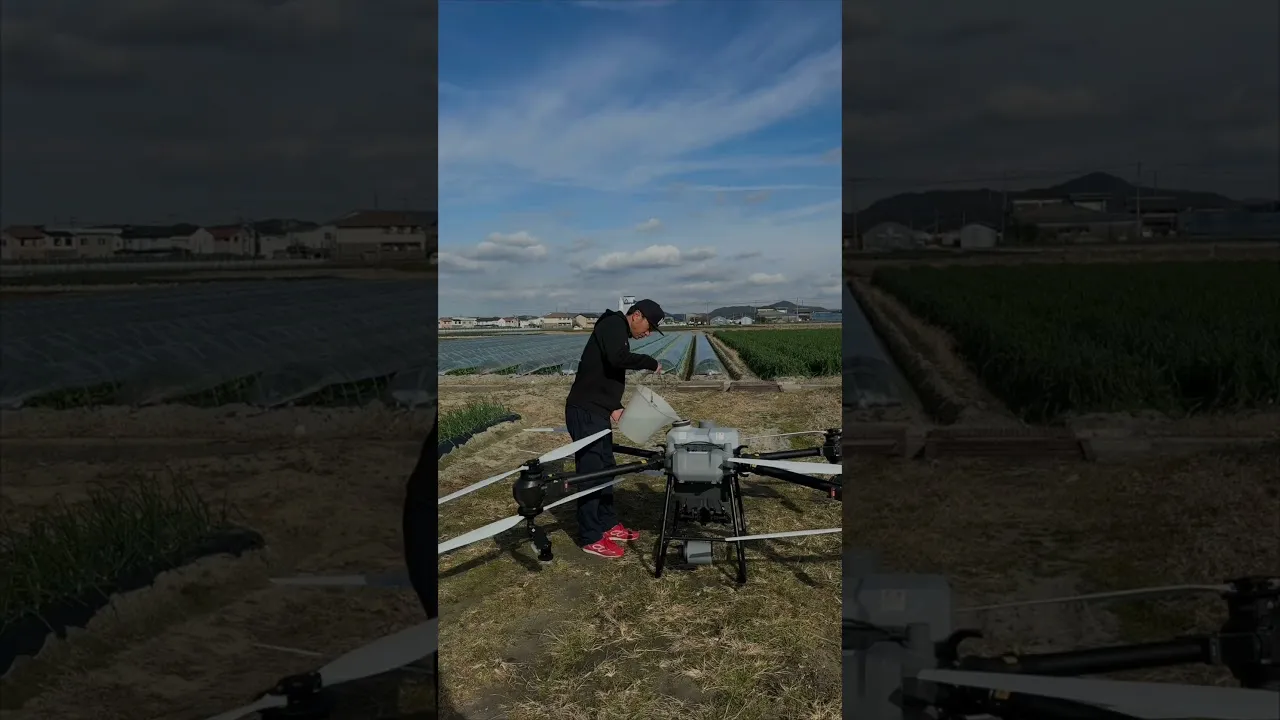
Deploying and Evaluating a Smart-Agriculture Agentic Engine for Full-Season Soybean Farm Operations

arXiv

arXiv:2609.00106v1 Announce Type: cross Abstract: This paper presents FAIRY, a full-stack smart-agriculture agent system developed for and deployed to an operating soybean research farm at Harbin Institute of Technology's smart-agriculture site. We develop FAIRY to execute and evaluate agentic agronomic operations on full-season spatiotemporal workflows that span ridge preparation, planting, irrigation, fertilization, pest and disease treatment, harvest, grain handling, drying, and storage. FAIRY integrates APIs and infrastructure across production-grade machinery, fixed soil and canopy sensors, multispectral and thermal drones, satellite vegetation products, a weather station, calibrated crop-process models, agronomic records, and multi-season yield histories. The system is built around the novel "everything is an event" execution paradigm, which represents spatiotemporal world evolution, remote sensing and UAV observations, sensor readings, crop-growth transitions, machinery actions,

agriculture

Facet-0: A Robotic Foundation Model for Contact-Rich Precise Manipulation

arXiv

arXiv:2609.01596v1 Announce Type: new Abstract: Real-world robotic assembly at sub-millimeter tolerances demands spatial precision, compliant interaction, and robustness to contact failures. We present Facet-0, a robotic foundation model that predicts and values the contact consequences of its actions. Facet-0 unifies multimodal representation learning and reinforcement learning (RL) post-training around a joint action-wrench proposal: a causal wrench history is aligned with vision-language semantics and kinematic state, and flow matching generates each action chunk together with the future wrist-wrench profile it is expected to induce. Deployment rollouts train a distributional Action-Wrench Critic to distinguish motions with similar task progress but different contact outcomes, while phase-aware rewards and contact-selective credit concentrate policy improvement on decisive interactions. To accommodate part-specific dynamics, a lightweight bounded actor reuses the frozen representati

manipulationreinforcement-learning

SG-AMP: Scene-Graph-Guided Active Perception and Semantics-Aware Motion Planning for Pepper Plants

arXiv

arXiv:2609.01579v1 Announce Type: new Abstract: We present SG-AMP, integrating robust depth completion with input-conditioned uncertainty, persistent panoptic mapping, plant scene-graph reasoning, and semantics-aware active view-motion planning. Beyond inspecting uncertain observed regions, the scene graph explicitly hypothesizes unobserved pepper--peduncle attachments and directs close-range sensing toward them. Candidate views are selected according to expected information gain, while class-dependent motion costs distinguish protected peppers, peduncles, and stems from conditionally traversable foliage. On pepper data, the perception network achieves $55.27\%$ semantic mIoU, $38.67\%$ PQ, and $40.62\,\mathrm{mm}$ depth RMSE, while input-conditioned uncertainty improves NYUv2 NLL from $-1.6518$ to $-1.6925$ and AUSE from $0.0102$ to $0.0087$.

planningperception

Does Imitation Learning Preserve Temporal Robustness in Dexterous Manipulation? An Expert-Learner Comparison Across Task Execution Speeds

arXiv

arXiv:2609.01453v1 Announce Type: new Abstract: Dexterous manipulation policies learned by imitation are typically evaluated for robustness to variation in scenes, objects, or instructions, but their performance across task execution speeds is less often examined. This leaves open how much temporal robustness a learner retains relative to the expert it imitates. We compare an expert and learner under the same task conditions, initial-condition draws, and speedup factors. We instantiate the evaluation in ParcelStow, a contact-rich task in which the robot acquires, reorients, and inserts a parcel. The demonstrations span the speedup range for the manipulation phases after parcel acquisition. A scripted expert and an Action Chunking with Transformers (ACT) policy trained from the expert's demonstrations both achieve 100 percent task success at nominal speed. Their success rates diverge within the demonstrated range: at its maximum, expert success is 84 percent and ACT success is 53 percen

manipulationimitation-learning

Vision-Based Leader-Follower Formation Control for Cooperative UAVs in GPS-Degraded Environments

arXiv

arXiv:2609.01420v1 Announce Type: new Abstract: Cooperation in multi-UAV systems requires reliable relative perception so that follower vehicles can maintain formation and continue their mission safely even when absolute positioning sensors degrade or fail. This paper presents a vision-based cooperative formation framework running on a follower UAV that uses a front-facing RGB-D camera to detect, track, and localize a leader UAV in real-time. A lightweight YOLO-based detector is trained on a dedicated drone dataset and deployed onboard to predict leader bounding boxes, which are then fused with depth information via a pinhole camera model to estimate the leader's relative pose. These estimates provide a leader-follower position controller and can also be used as a backup when GPS or external localization is unavailable. This framework is implemented as a set of ROS nodes and evaluated in a physics-based multi-UAV simulation built on XTDrone, with sensor noise and communication dropouts

controlperception

Evaluating Multimodal LLMs as Generalist Vision-Language-Action Agents for Drone Control: Commanding, Approaching, Tracking and Searching

arXiv

arXiv:2609.01404v1 Announce Type: new Abstract: Multimodal Large Language Models (MLLMs) are strong perceivers of images and video. We ask how far that reach extends into acting: dropping an MLLM directly into a drone's control loop, with its entire action space declared solely in the prompt. Recent systems approach this setting but increasingly narrow the model's decision-making. We widen it back. We introduce DroneCATS-Agent, an architecture where the MLLM is a swappable component, and DroneCATS, a benchmark treating the model as the independent variable. Beyond merely flying toward a pixel, our agent entrusts the model to yaw and search, deliberate when unsure, and self-declare arrival---all without fine-tuning or function-calling schemas. Evaluating frontier and open models across four core capabilities---approaching a visible target, tracking a moving one, searching outside the initial view, and commanding a multi-drone fleet---reveals that even the simplest embodied settings are

control

Autonomous robotic bridging using distributed swarm control without inter-agent communication

arXiv

arXiv:2609.01394v1 Announce Type: new Abstract: We describe SCARAB--Swarm-Capable Autonomous Robotic Aquatic Bridging. Using distributed swarm control and multi-model sensing of agents and docking targets, agents can localize themselves, join into formations and proceed to desired target locations. Our technologies would eventually allow the Army to perform unpredictable, dispersed river crossings, enhance crew survivability, and minimize the logistics footprint compared to the current Improved Ribbon Bridge. Our methods operate without GPS or RF communications, though these can be used in non-contested environments (e.g., civilian disaster relief for flooding, etc.). We demonstrate our system via physics-engine-based simulation of several agents using unmanned surface vehicles (USVs) in the presence of currents and wind.

swarmautonomouscontrollogistics

Obstacle-Aware Autonomous Coverage and Navigation for Outdoor Robots

arXiv

arXiv:2609.01384v1 Announce Type: new Abstract: Long-duration outdoor coverage with autonomous platforms remains challenging beyond classical planning: deployments face localization drift in open spaces, obstacles in cluttered sites, controller feasibility in turn-heavy maneuvers, and persistent autonomy with energy management. We propose a unified ROS 2 architecture for outdoor coverage that combines coverage planning, robust localization, and Nav2-based execution. A dual-antenna RTK-GNSS fused in an EKF keeps the robot pose, both position and heading, accurate across long missions; three controller-aware refinements are added to a mature coverage planner; a Behavior-Tree mission manager coordinates multi-goal execution, layered recovery, cost-aware goal management, and autonomous docking for return-to-charge. We validate the stack through simulation and real-world trials across multiple outdoor areas with varying geometries and obstacle densities. Overall, these results show that the

navigationautonomousplanningcontrol

Scalable Rao-Blackwellized Online Planning for High-Dimensional POMDPs

arXiv

arXiv:2609.01351v1 Announce Type: new Abstract: Online planning under uncertainty remains a fundamental challenge for robotic systems operating in partially observable environments with high-dimensional state spaces. While sampling-based POMDP solvers enable approximate decision-making in large or continuous domains, their performance degrades as belief dimensionality increases due to the high variance inherent in Monte Carlo-based estimation. In this work, we extend the Rao-Blackwellized online POMDP (RB-POMDP) framework to improve its generalizability in high-dimensional settings through hybrid continuous-discrete belief representations. By analytically propagating uncertainty associated with marginalized state components during tree-based planning, the proposed approach reduces sampling-induced variance in value estimation. We demonstrate the effectiveness of this framework in a robotic search-and-rescue task by integrating it with FastSLAM 2.0. Experimental results show that the pr

slamplanning

Contact: hello@roboverse.space