Skip to content
최신 정보

뉴스 및 연구

최신 로봇 뉴스, 업계 업데이트, 연구 논문 및 획기적인 발표를 확인하세요.

13,929
총 기사
426
뉴스 기사
13,498
연구 논문
일일
업데이트

Get email alerts for new robotics research

Available on Pro and Business plans

Upgrade for Alerts

뉴스 및 연구

13021 / 13498 기사 표시

AI Evaluation Should Require Standardized Item-Level Data Releases

arXiv

arXiv:2604.03244v2 Announce Type: replace Abstract: This position paper argues that standardized item-level benchmark data should become the default infrastructure for AI evaluation. Current evaluations suffer from underspecified item selection, construct misalignment, and poor generalization. The root cause of these failures is a misplaced focus on aggregate model scores. Without item-level evidence, validity claims cannot be assessed, resulting in inflated capability claims, misdirected research, and unwarranted trust in deployed systems. Our position is that designing valid evaluations requires empirical evidence from item-level model responses, and the standardized release of such data should be treated as core AI evaluation infrastructure. Such a release, in addition, enables transparency, replicability, and auditability of evaluation results. To show the norm is both feasible and consequential, we construct OpenEval, an item-level archive of 10M responses across 155k items from w
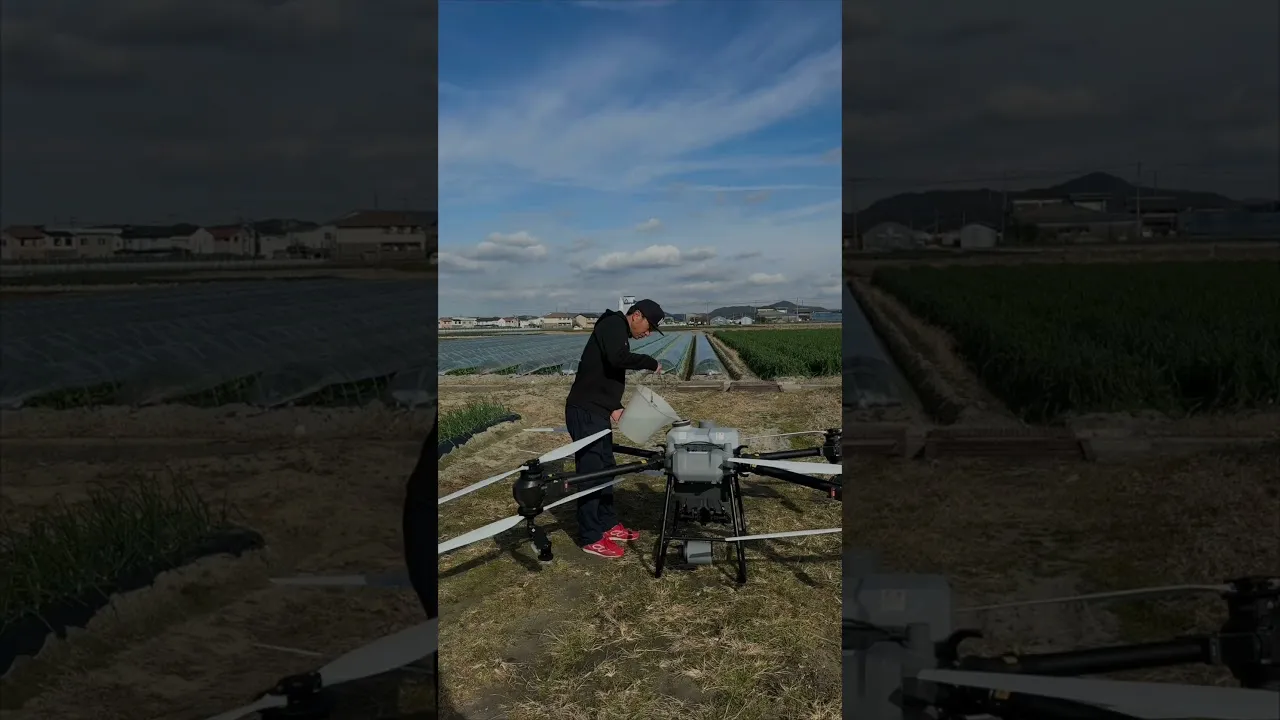

PhenoYieldNet: Learning Crop-Aware Phenological Responses for Multi-Crop Yield Prediction

arXiv

arXiv:2605.23478v1 Announce Type: new Abstract: Accurate crop yield prediction is crucial for sustainable agriculture and global food security. While existing methods are predominantly developed for single-crop prediction, they often struggle to generalize across diverse crop types, without addressing the unique crop phenological responses that are dynamically modulated by complex weather patterns. In this paper, we propose PhenoYieldNet, a multi-crop yield prediction framework that learns crop-specific phenology by explicitly modeling their responses with temporal drivers. Specifically, we develop a crop-aware temporal decoder consisting of a Crop Phenology Bank (CPB) and a Crop Phenology Attention (CPA) module. The CPB integrates a set of learnable embeddings, which leverage a query to guide the CPA module to learn the most relevant phenology patterns for the specific crop. And the CPA module explicitly captures multi-scale trend and variation components to construct temporal context

agriculture

SCOPE: Simulating Cross-game Operations in Playable Environments for FPS World Models

arXiv

arXiv:2605.23345v1 Announce Type: new Abstract: Interactive world models for first-person shooter (FPS) games must resolve high-frequency overlapping control signals at every frame without disrupting unaffected regions. Existing methods inject actions globally and train on single titles, failing under dense FPS inputs. We observe that FPS actions are spatially selective: discrete events such as firing or reloading affect only a localized region around the weapon (the scope), while continuous camera and movement signals govern stable surroundings. We propose SCOPE, which inserts a conditioning module into each transformer block of a pretrained video diffusion model. It reshapes features into per-pixel temporal sequences so that each position computes its action response from local visual content. This separates in-scope effects from out-of-scope generation without segmentation labels. We also introduce CrossFPS, the first multi-game FPS dataset with frame-aligned action telemetry. It co

control

Causal Additive Models with Unobserved Causal Paths and Backdoor Paths

arXiv

arXiv:2502.07646v3 Announce Type: replace Abstract: Causal additive models provide a tractable yet expressive framework for causal discovery in the presence of hidden variables. When unobserved backdoor or causal paths exist between two variables, their causal relationship is often unidentifiable under existing theories. We establish sufficient conditions under which causal directions can be identified in many such cases. These conditions rely on new characterizations of regression sets to determine independence among regression residuals and conditional independencies among observed variables. Building on these results, we introduce a search algorithm that incorporates these innovations and prove its soundness and completeness. Empirical evaluations demonstrate its competitive performance against state-of-the-art methods.

Tensor Cache: Eviction-conditioned Associative Memory for Transformers

arXiv

arXiv:2605.22884v1 Announce Type: cross Abstract: Autoregressive Transformer KV caches grow linearly with context length; sliding-window caching bounds memory but discards evicted tokens entirely, so relevant evidence outside the window becomes inaccessible. We introduce \emph{Tensor Cache}, a two-level cache that pairs sliding-window softmax attention as a first-level cache (L1) with a fixed-size outer-product fast-weight memory as a second-level cache (L2) fed by KV pairs evicted from the window. Recent tokens remain in exact local attention; evicted pairs are compressed into a per-layer matrix $A$ and read by future queries through a single matrix multiplication, exploiting the linear-attention identity $q_t(k_i \otimes v_i)=\langle q_t,k_i\rangle v_i$. A learned scalar gate fuses the L1 and L2 outputs, and per-head decay and write-rate parameters are trained end-to-end. The outer-product memory and the read identity are well-known; our contribution is their use as an L2 cache fed e

What Does the Server See? Understanding Privacy Leakage from Large Language Models in Split Inference

arXiv

arXiv:2605.23158v1 Announce Type: cross Abstract: The deployment of large language models (LLMs) on resource-constrained devices remains challenging, spurring interest in split inference, where models are partitioned between client and server to reduce computational burden and enhance privacy by transmitting only intermediate activations. However, the privacy-preserving capabilities of split inference, particularly in the context of LLMs, have not been exhaustively investigated. To fill this gap, we introduce ActInv, which solves an intermediate activation matching problem to reconstruct the client's input. Extensive evaluations demonstrate that ActInv achieves high-fidelity reconstructions, even in the presence of common perturbation-based defenses such as Gaussian noise injection and activation sparsification. To systematically understand this vulnerability, we develop Perturbation Amplification Factor (PAF), a metric for quantifying a layer's inherent resistance to reconstruction. O

The Attribution Contract: Feature Attribution for Generative Language Models

arXiv

arXiv:2605.23080v2 Announce Type: replace Abstract: Feature attribution methods promise to identify which input features matter for a model output. In generative language models, however, it is often unclear what should count as a feature in the first place. In autoregressive language models, earlier generated tokens are both outputs of the model and inputs to later predictions. In diffusion language models, generation proceeds through iterative denoising or unmasking rather than fixed left-to-right prediction, so local explanation may target a state of diffusion rather than a next token. We argue that this ambiguity is not merely an implementation detail, but a conceptual limitation of carrying classifier-era feature attribution directly into generative language modeling. We introduce the Attribution Contract, a specification for feature-attribution claims that names what output is being explained, which features are eligible to receive attribution, what generative process is assumed,

PIMbot: A Self-Adaptive Attack Framework for Adversarial Manipulation of Multi-Robot Reinforcement Learning

arXiv

arXiv:2605.23027v1 Announce Type: new Abstract: Recent research has demonstrated the potential of reinforcement learning in effective multi-robot collaboration, particularly in social dilemmas where robots face a trade-off between self-interest and collective benefits. However, environmental factors such as miscommunication and adversarial robots can impact cooperation, making it crucial to explore how multi-robot communication can be manipulated to achieve different outcomes. This paper presents PIMbot, a framework that manipulates outcomes via two complementary levers: (i) incentive manipulation of the reward channel and (ii) policy manipulation of an agent's own actions. An adaptive multi-objective controller balances these levers in an online manner. Our work introduces a novel approach to manipulation in recent multi-agent RL social dilemmas that utilize a unique reward function for incentivization. By utilizing our proposed PIMbot mechanisms, a robot is able to manipulate the soc

manipulationreinforcement-learningcontrol

Is TabPFN the Silver Bullet for Insurance Pricing?

arXiv

arXiv:2605.22892v2 Announce Type: replace-cross Abstract: Modelling claim frequency and severity for non-life insurance pricing predominantly relies on generalised linear models, with gradient-boosted machines as the leading machine learning alternative. Tabular foundation models (TFMs) present a fundamentally different inference paradigm. By pre-training on large collections of synthetic datasets, TFMs enable inference on new data through in-context learning, without any dataset-specific fitting or hyperparameter tuning. This paper presents a first empirical evaluation of TabPFN for motor insurance pricing, benchmarking it against GLM and XGBoost on two publicly available MTPL datasets. Our results show that TabPFN does not consistently outperform established baselines, exhibits substantially longer inference times, and is sensitive to the size of the in-context training set. While tabular foundation models represent a promising direction, particularly in data-scarce settings, their c

Bridging AI and Clinical Reasoning: Abductive Explanations for Alignment on Critical Symptoms

arXiv

arXiv:2602.13985v2 Announce Type: replace Abstract: Artificial intelligence (AI) has demonstrated strong potential in clinical diagnostics, often achieving accuracy comparable to or exceeding that of human experts. A key challenge, however, is that AI reasoning frequently diverges from structured clinical frameworks, limiting trust, interpretability, and adoption. Critical symptoms, pivotal for rapid and accurate decision-making, may be overlooked by AI models even when predictions are correct. Existing post hoc explanation methods provide limited transparency and lack formal guarantees. To address this, we leverage formal abductive explanations, which offer consistent, guaranteed reasoning over minimal sufficient feature sets. This enables a clear understanding of AI decision-making and allows alignment with clinical reasoning. Our approach preserves predictive accuracy while providing clinically actionable insights, establishing a robust framework for trustworthy AI in medical diagno

medical

Structure-Guided Entity Resolution: Fine-Tuning LLMs for Robust Name Matching in Complex Linguistic Contexts

arXiv

arXiv:2605.23597v1 Announce Type: cross Abstract: Matching person names across heterogeneous records is a core challenge in entity resolution, especially within linguistically and culturally complex environments. Variations in naming conventions, inconsistent transliteration across scripts, and frequent data entry errors make it difficult to unify user identities, an essential requirement for Know Your Customer (KYC) compliance. While Large Language Models have shown promise in understanding natural language, they often struggle with the structured ambiguity present in such domain-specific settings. This paper introduces Structure-Guided Entity Resolution (SGER), a novel framework that fine-tunes an LLM through a two-phase curriculum. The model is first trained to parse the grammatical and semantic structure of personal names, then optimized for the downstream task of binary entity matching. We evaluate SGER in the challenging context of Indian identity data, one of the most linguistic

FusionSense: Tri-Stage Near-Sensor Learning for Runtime-Adaptive Multimodal Edge Intelligence

arXiv

arXiv:2605.22868v1 Announce Type: new Abstract: Autonomous systems and smart-industry deployments increasingly split computation across near-sensor, edge, and cloud resources, where tight energy, latency, and reliability budgets demand run-time adaptivity. In practice, deciding what to compute and transmit at each point is pivotal; yet as multimodal sensor suites (cameras, LiDAR/depth, etc.) proliferate at the edge, most prior approaches either (i) fuse modalities on powerful servers or (ii) apply uni-modal near-sensor filters that ignore cross-modal dependencies, leading to redundant transmissions or missed events. We present FusionSense, a fusion-aware intelligent sensing framework for energy-constrained autonomous edge systems. Lightweight near-sensor classifiers are trained via a three-step procedure: (i) a server-side fusion model learns the downstream task, (ii) filter-out-safe (FoS) labels quantify each modality's necessity relative to the fused decision, and (iii) an edge-side

autonomous

Spectra as Language: Large Language Models for Scalable Stellar Parameter and Abundance Inference

arXiv

arXiv:2605.22162v3 Announce Type: replace-cross Abstract: Stellar spectra encode key information on the physical properties and chemical compositions of stars. Accurate stellar parameter determination is essential for addressing major questions such as galaxy and stellar evolution. Large-scale spectroscopic surveys have accumulated unprecedented spectral data. Traditional feature extraction or model-fitting approaches struggle with high-dimensional, massive datasets, limited generalization, and computational inefficiency. Recent advances in large language models demonstrate strong generalization and feature-learning in tasks like natural language processing, DNA/RNA sequence analysis, and protein/chemical parsing. Stellar spectra are continuous sequential signals, enabling the transfer of language models to stellar spectroscopy. Here, we propose a two-stage large language model framework for stellar parameter inference, achieving accurate estimation of effective temperature, surface gr

SciHorizon-GENE: Benchmarking LLM for Life Sciences Inference from Gene Knowledge to Functional Understanding

arXiv

arXiv:2601.12805v3 Announce Type: replace-cross Abstract: Large language models (LLMs) have shown growing promise in biomedical research, particularly for knowledge-driven interpretation tasks. However, their ability to reliably reason from gene-level knowledge to functional understanding, a core requirement for knowledge-enhanced cell atlas interpretation, remains largely underexplored. To address this gap, we introduce SciHorizon-GENE, a large-scale gene-centric benchmark constructed from authoritative biological databases. The benchmark integrates curated knowledge for over 190K human genes and comprises more than 540K questions covering diverse gene-to-function reasoning scenarios relevant to cell type annotation, functional interpretation, and mechanism-oriented analysis. Motivated by behavioral patterns observed in preliminary examinations, SciHorizon-GENE evaluates LLMs along four biologically critical perspectives: research attention sensitivity, hallucination tendency, answer

medical

MuellerPT: Decomposition Driven Pretraining for Dense Learning in Mueller Polarimetry

arXiv

arXiv:2605.23840v1 Announce Type: new Abstract: Mueller matrix imaging provides rich, physically meaningful contrast for biomedical tissue analysis, but supervised learning is hindered by scarce dense annotations and strong domain shifts across specimens and acquisition settings. We introduce MuellerPT, a physics guided pre-training approach that learns transferable dense representations by predicting Lu-Chipman decomposition maps from per-pixel 4x4 Mueller matrices. To scale pre-training, we collected a new large Multispectral Animal Polarimetric Organ dataset (MAP-Org). The pre-trained encoder is adapted with a segmentation head for grey vs. white matter segmentation in lamb brain. A classification head is used for colorectal cancer vs. non-cancer classification. Both segmentation and classification are evaluated across few-shot learning scenarios. In segmentation, MuellerPT improves label efficiency and cross specimen transfer compared to models without pre-training, achieving an ab

medical

Contact: hello@roboverse.space
