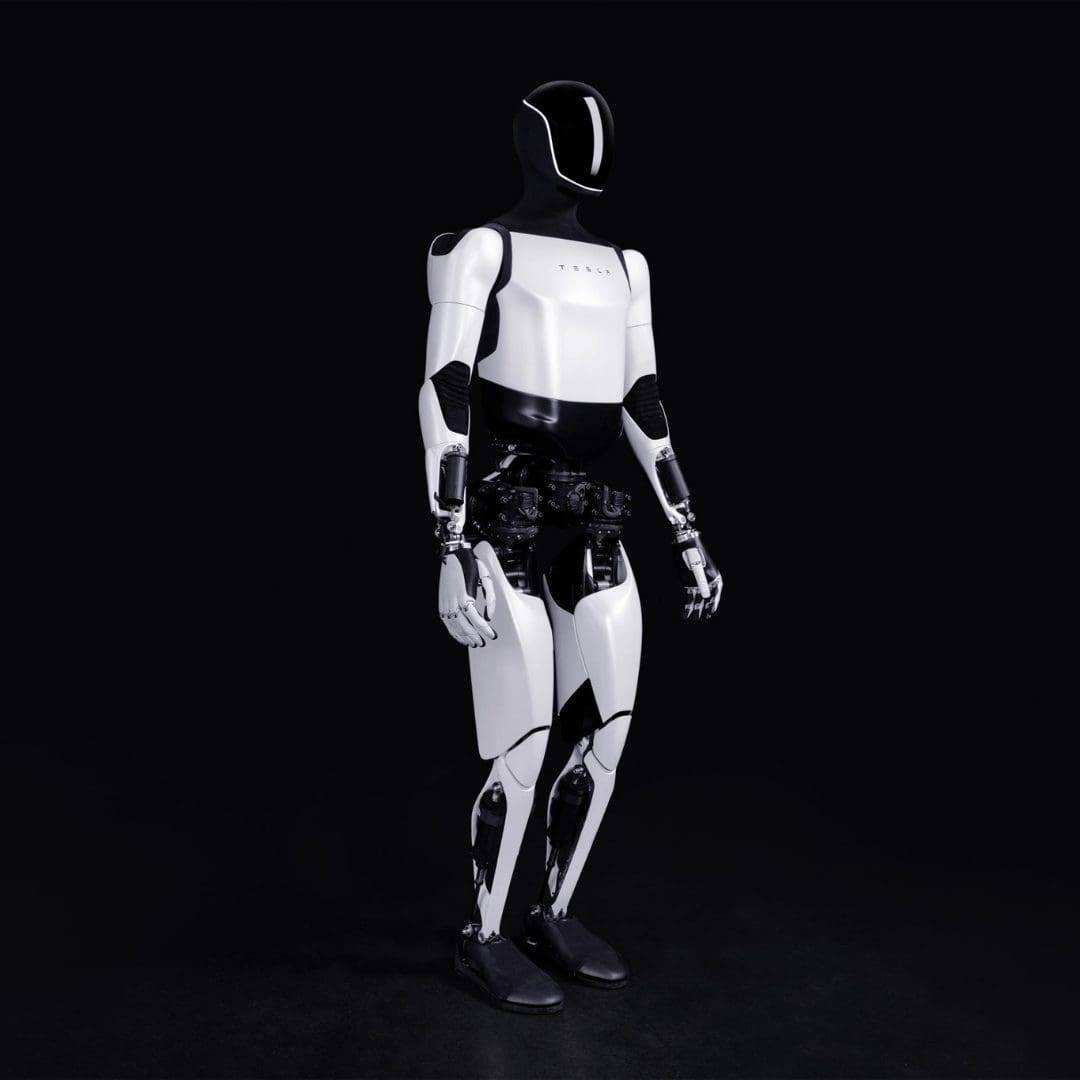
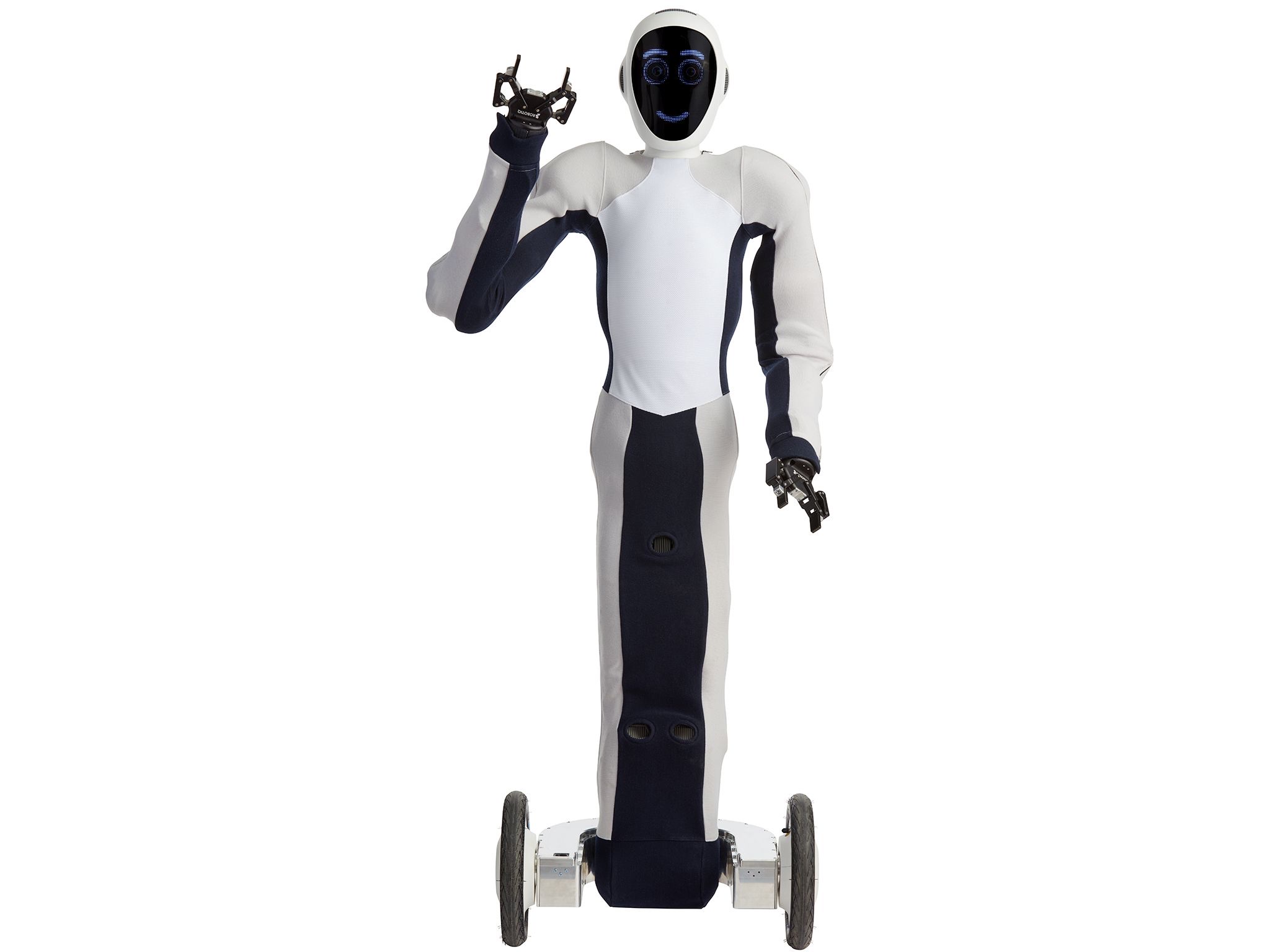
Walden Robotics launches at $1.1B valuation for general-purpose robots
RSS Feed
robot-newsrss
Loading…
Stay updated with the latest robotics news, industry updates, research papers, and breakthrough announcements.
Get email alerts for news & research
Available on Pro and Business plans
Showing 2476 of 10274 articles
arXiv:2603.08503v2 Announce Type: replace-cross Abstract: Omnidirectional images are increasingly used in robotics and vision due to their wide field of view. However, extending 3D Gaussian Splatting (3DGS) to panoramic camera models remains challenging, as existing formulations are designed for perspective projections and naive adaptations often introduce distortion and geometric inconsistencies. We present Spherical-GOF, an omnidirectional Gaussian rendering framework built upon Gaussian Opacity Fields (GOF). Unlike projection-based rasterization, Spherical-GOF performs GOF ray sampling directly on the unit sphere in spherical ray space, enabling consistent ray-Gaussian interactions for panoramic rendering. To make the spherical ray casting efficient and robust, we derive a conservative spherical bounding rule for fast ray-Gaussian culling and introduce a spherical filtering scheme that adapts Gaussian footprints to distortion-varying panoramic pixel sampling. Extensive experiments o
arXiv:2511.16144v2 Announce Type: replace-cross Abstract: Recent advances in 3D Gaussian Splatting (3DGS) have enabled Simultaneous Localization and Mapping (SLAM) systems to build photorealistic maps. However, these maps lack the open-vocabulary semantic understanding required for robotic interaction. Integrating language features into SLAM remains a significant challenge, as storing high-dimensional features incurs excessive memory and rendering overhead, while existing methods with static models lack adaptability for novel environments. We propose LEGO-SLAM (Language-Embedded Gaussian Optimization SLAM), a framework that achieves real-time, open-vocabulary mapping within a 3DGS-based SLAM system. At the core of our method is a scene-adaptive autoencoder that distills high-dimensional language embeddings into a compact 16-dimensional feature space, reducing the memory per Gaussian and accelerating rendering. Unlike static approaches, our encoder adapts online to unseen scenes. These
arXiv:2604.13853v2 Announce Type: replace Abstract: Safe and explainable motion planning remains a central challenge in autonomous driving. While rule-based planners offer predictable and explainable behavior, they often fail to grasp the complexity and uncertainty of real-world traffic. Conversely, learned planners exhibit strong adaptability but suffer from reduced transparency and occasional safety violations. We introduce Mosaic, a framework for structured decision-making that integrates both paradigms through arbitration graphs. By decoupling trajectory verification and selection from the generation of trajectories by individual planners, every decision becomes transparent and traceable. This separation lets verification and trajectory selection contribute independently: centralized verification acts as a safety floor, reducing at-fault collisions from 25 for each standalone planner to 16. In contrast, per-step trajectory selection acts as a performance ceiling, combining the comp
arXiv:2603.08862v2 Announce Type: replace Abstract: Autonomous navigation in highly constrained environments remains challenging for mobile robots. Classical navigation approaches offer safety assurances but require environment-specific parameter tuning; end-to-end learning bypasses parameter tuning but struggles with precise control in constrained spaces. To this end, recent robot learning approaches automate parameter tuning while retaining classical systems' safety, yet still face challenges in generalizing to unseen environments. Recently, Vision-Language-Action (VLA) models have shown promise by leveraging foundation models' scene understanding capabilities, but still struggle with precise control and inference latency in navigation tasks. In this paper, we propose Adaptive Planner Parameter Learning from Vision-Language-Action Model (\textsc{applv}). Unlike traditional VLA models that directly output actions, \textsc{applv} leverages pre-trained vision-language models with a regr
arXiv:2603.05995v2 Announce Type: replace Abstract: Off-road autonomous driving poses significant challenges such as navigating unmapped, variable terrain with uncertain and diverse dynamics. Addressing these challenges requires effective long-horizon planning and adaptable control. Reinforcement Learning (RL) offers a promising solution by learning control policies directly from interaction. However, because off-road driving is a long-horizon task with low-signal rewards, standard RL methods are challenging to apply in this setting. We introduce TADPO, a novel policy gradient formulation that extends Proximal Policy Optimization (PPO), leveraging off-policy trajectories for teacher guidance and on-policy trajectories for student exploration. Building on this, we develop a vision-based, end-to-end RL system for high-speed off-road driving, capable of navigating extreme slopes and obstacle-rich terrain. We demonstrate our performance in simulation and, importantly, zero-shot sim-to-real
arXiv:2602.05513v4 Announce Type: replace Abstract: Bimanual dexterous manipulation relies on integrating multimodal inputs to perform complex real-world tasks. To address the challenges of effectively combining these modalities, we propose DECO, a decoupled multimodal diffusion transformer that disentangles vision, proprioception, and tactile signals through specialized conditioning pathways, enabling structured and controllable integration of multimodal inputs, with a lightweight adapter for parameter-efficient injection of additional signals. Alongside DECO, we release DECO-50 dataset for bimanual dexterous manipulation with tactile sensing, consisting of 50 hours of data and over 5M frames, collected via teleoperation on real dual-arm robots. We train DECO on DECO-50 and conduct extensive real-world evaluation with over 2,000 robot rollouts. Experimental results show that DECO achieves the best performance across all tasks, with a 72.25% average success rate and a 21% improvement o
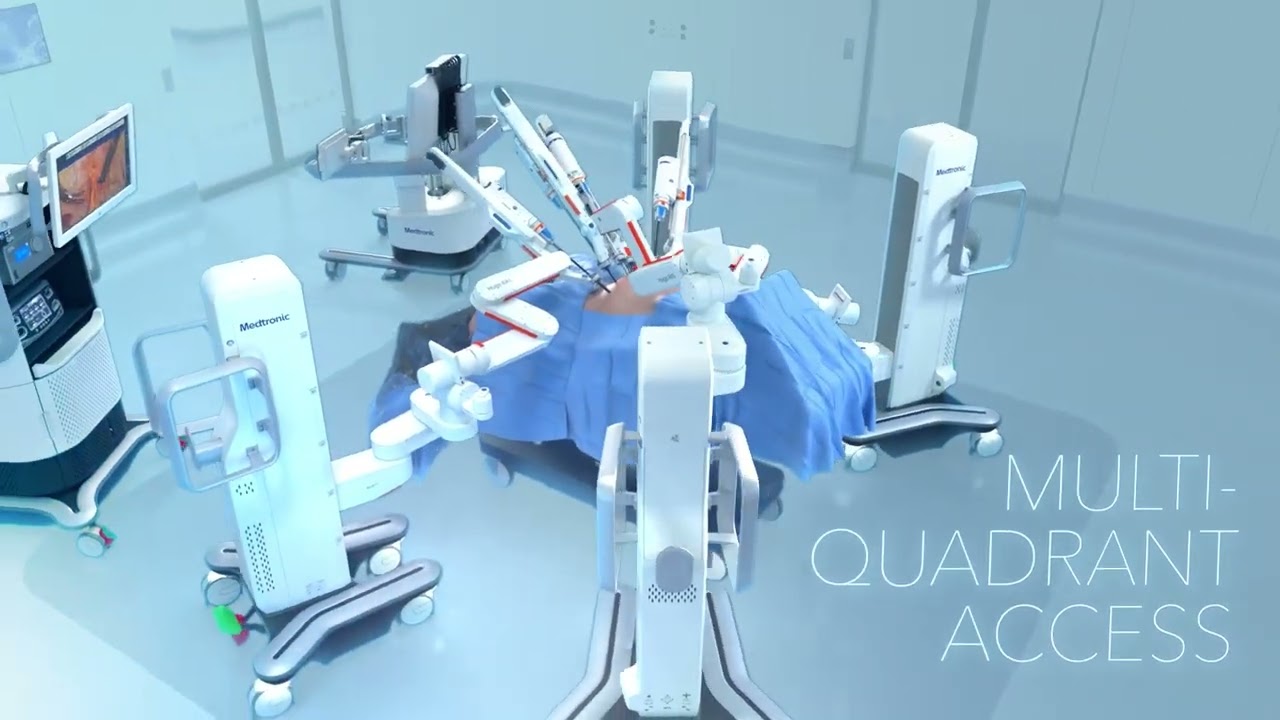
arXiv:2510.03529v3 Announce Type: replace Abstract: Robotic laparoscopic surgery has gained increasing attention in recent years for its potential to deliver more efficient and precise minimally invasive procedures. However, adoption of surgical robotic platforms remains largely confined to high-resource medical centers, exacerbating healthcare disparities in rural and low-resource regions. To close this gap, a range of solutions has been explored, from remote mentorship to fully remote telesurgery. Yet, the practical deployment of surgical robotic systems to underserved communities remains an unsolved challenge. Humanoid systems offer a promising path toward deployability, as they can directly operate in environments designed for humans without extensive infrastructure modifications -- including operating rooms. In this work, we introduce LapSurgie, the first humanoid-robot-based laparoscopic teleoperation framework. The system leverages an inverse-mapping strategy for manual-wristed
arXiv:2508.19186v2 Announce Type: replace Abstract: Reactive obstacle avoidance methods often cause agents to become trapped in local minima, because they can often only reason one step ahead (i.e., the next action based on the current state). In this paper, we use model checking to achieve reactive multi-step planning and obstacle avoidance on an autonomous robot. Our small, purpose-built model checking algorithm generates plans in situ (within the robot's code) based on ``core'' knowledge and attention as found in biological agents. This is achieved in real-time using no pre-computed data on a low-powered device. Our approach is based on chaining temporary control systems that are spawned to counteract disturbances in the local environment which disrupt an autonomous agent from its preferred action (or resting state). We mitigate state-space explosion by relying on temporary snapshots of the immediate environment, restricting the number of states. Multi-step planning using counter-ex
arXiv:2507.21245v2 Announce Type: replace Abstract: An accurate initial heading angle is essential for efficient and safe navigation across diverse domains. Unlike magnetometers, gyroscopes can provide accurate heading reference independent of the magnetic disturbances in a process known as gyrocompassing. Yet, accurate and timely gyrocompassing, using low-cost gyroscopes, remains a significant challenge in scenarios where external navigation aids are unavailable. Such challenges are commonly addressed in real-world applications such as autonomous vehicles, where size, weight, and power limitations restrict sensor quality, and noisy measurements severely degrade gyrocompassing performance. To cope with this challenge, we propose a novel diffusion denoiser-aided gyrocompass approach. It integrates a diffusion-based denoising framework with an enhanced learning-based heading estimation model. The diffusion denoiser processes raw inertial sensor signals before input to the deep learning m
arXiv:2507.15833v3 Announce Type: replace Abstract: Human vision is a highly active process driven by gaze, which directs attention to task-relevant regions through foveation, dramatically reducing visual processing. In contrast, robot learning systems typically rely on passive, uniform processing of raw camera images. In this work, we explore how incorporating human-like active gaze into robotic policies can enhance efficiency and robustness. We develop GIAVA (Gaze Integrated Active-Vision ALOHA), a robot vision system that emulates human head and neck movement, and gaze adjustment for foveated processing. Extending the AV-ALOHA robot platform, we introduce a framework for simultaneously collecting eye-tracking, perspective control, and robot manipulation demonstration data from a human operator. We also open-source a simulation benchmark and dataset for training robot policies that incorporate human gaze. Inspired by recent work in foveated image segmentation and given the widespread
arXiv:2507.11498v3 Announce Type: replace Abstract: Humanoid robots have seen remarkable advances in dexterity, balance, and locomotion, yet their role in expressive domains such as music performance remains largely unexplored. Musical tasks, like drumming, present unique challenges such as split-second timing, rapid contacts, and multi-limb coordination over performances lasting minutes. In this paper, we introduce Robot Drummer, a simulation framework for humanoid drumming across a diverse repertoire of songs. We formulate humanoid drumming as the realization of timed contact events encoded as a Rhythmic Contact Chain. To handle the long-horizon nature of musical performance, we decompose each track into fixed-length segments and train a single policy across all segments in parallel using reinforcement learning. Through extensive experiments on over thirty popular tracks, our results demonstrate that Robot Drummer consistently achieves high F1 scores and enables efficient learning of