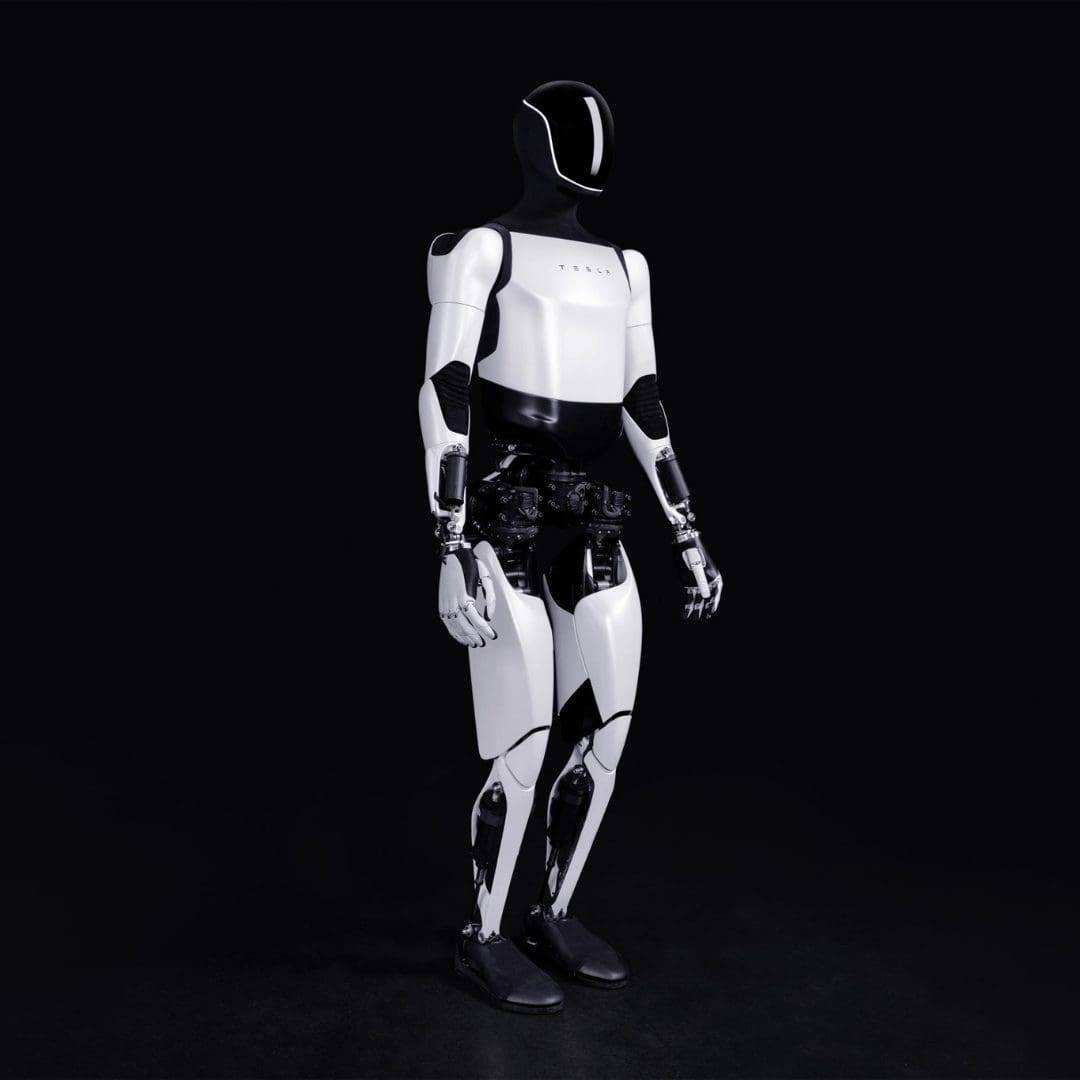
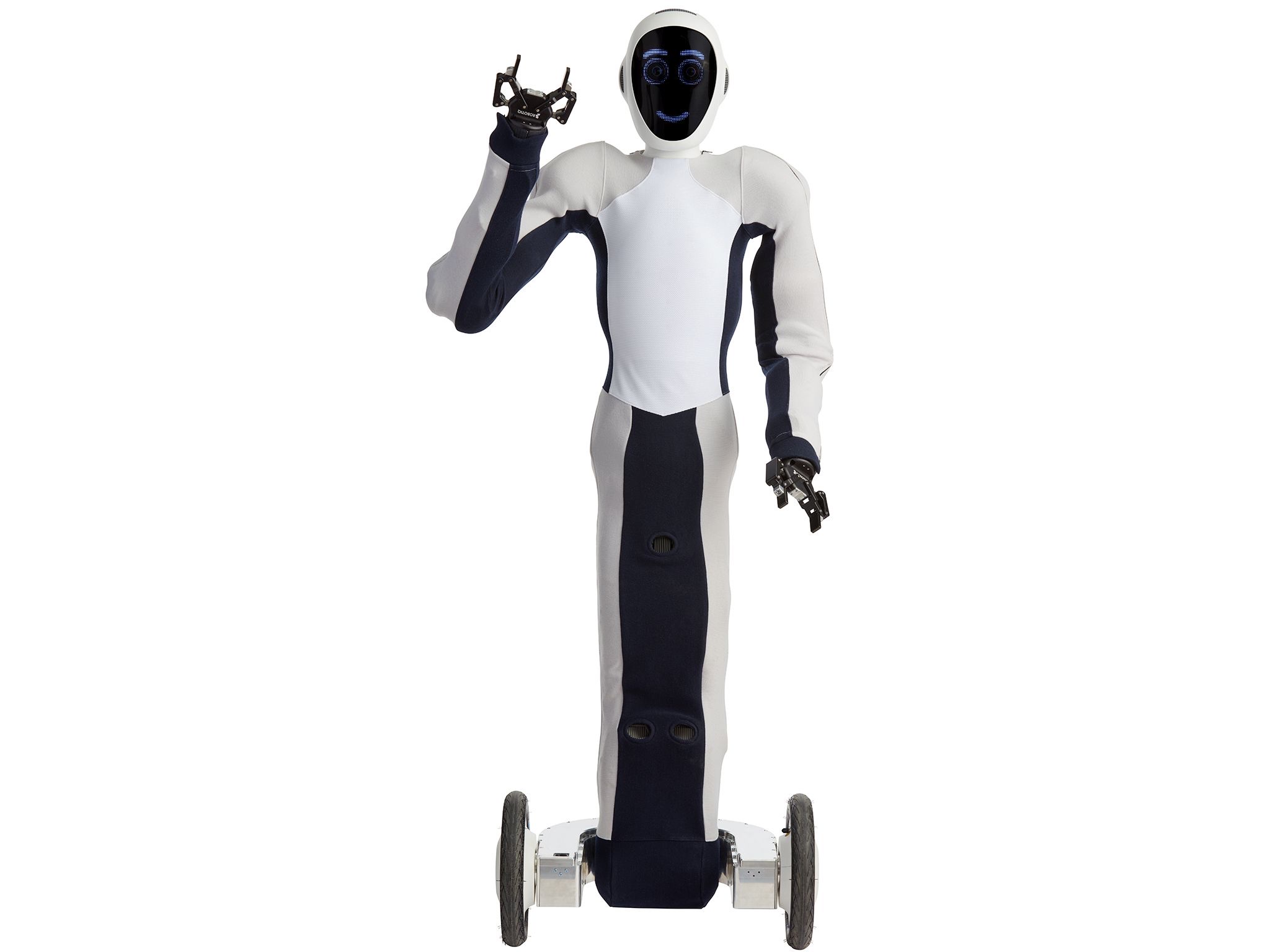
Schaeffler plans to mass produce gearboxes for humanoid robots in 2027
RSS Feed
robot-newsrss
Loading…
Stay updated with the latest robotics news, industry updates, research papers, and breakthrough announcements.
Get email alerts for news & research
Available on Pro and Business plans
Showing 796 of 10020 articles
arXiv:2601.11665v3 Announce Type: replace-cross Abstract: Unmanned Aerial Vehicles (UAVs) are transforming infrastructure inspections in the Architecture, Engineering, Construction, and Facility Management (AEC+FM) domain. By synthesizing insights from over 150 studies, this review paper highlights UAV-based methodologies for data acquisition, photogrammetric modeling, defect detection, and decision-making support. Key innovations include path optimization, thermal integration, and advanced machine learning (ML) models such as YOLO and Faster R-CNN for anomaly detection. UAVs have demonstrated value in structural health monitoring (SHM), disaster response, urban infrastructure management, energy efficiency evaluations, and cultural heritage preservation. Despite these advancements, challenges in real-time processing, multimodal data fusion, and generalizability remain. A proposed workflow framework, informed by literature and a case study, integrates RGB imagery, LiDAR, and thermal sen
arXiv:2510.25960v2 Announce Type: replace-cross Abstract: In this paper, we present a framework that uses acoustic side-channel analysis (ASCA) to monitor and verify whether a robot correctly executes its intended commands. We develop and evaluate a machine-learning-based workflow verification system that uses acoustic emissions generated by robotic movements. The system can determine whether real-time behavior is consistent with expected commands. The evaluation takes into account movement speed, direction, and microphone distance. The results show that individual robot movements can be validated with over 80\% accuracy under baseline conditions using four different classifiers: Support Vector Machine (SVM), Deep Neural Network (DNN), Recurrent Neural Network (RNN), and Convolutional Neural Network (CNN). Additionally, workflows such as pick-and-place and packing could be verified with similarly high confidence. Our findings demonstrate that acoustic signals can support real-time, low
arXiv:2510.01192v2 Announce Type: replace-cross Abstract: Emulating empathy in human-robot interaction is a key component for achieving satisfying social, trustworthy, and ethical robot interaction with older people. Following comments from older adult study participants, the article uses humanities methods to identify a gap in defining empathetic robot care activities. It provides a design focus to mitigate it. Current human-robot designs, to a certain extent, neglect to include empathy as a theorized design pathway. Using one digital humanities research collection on humanoid robots, it contributes an empathetic care vocabulary as a design pathway for a productive underlying foundation for designing Socially Assistive Robots (SARs) that aim to support older people's goals of aging-in-place. Using rhetorical theory, this paper defines the socio-cultural expectations for convincing empathetic relationships.
arXiv:2505.13064v4 Announce Type: replace-cross Abstract: Multi-body mechanical systems have rich internal dynamics, whose solutions can be exploited as energy-efficient control targets. Yet, solutions non-trivially depend on system parameters, obscuring feasible properties for use as target trajectories. For periodic regulation tasks in robotics applications, we investigate properties of nonlinear oscillations collected in Lyapunov subcenter manifolds (LSMs) of conservative mechanical systems (CMs). Using a time-symmetry of CMs, it is shown that mild non-resonance conditions guarantee that LSMs exclusively consist of oscillations between two points of zero velocity. The existence of a unique generator is proven, which is a connected, 1D manifold that collects these points of zero velocity for a given LSM. Furthermore, it is shown that an additional spatial symmetry provides LSMs with yet stronger properties of Rosenberg manifolds. Here all oscillations pass through a unique equilibriu
arXiv:2604.17810v2 Announce Type: replace Abstract: This paper considers multi-agent embodied question answering (MA-EQA), which enables robot teams to answer queries based on their long-horizon observations. In contrast to existing edge resource management methods that optimize sensing, communication, or computation performance metrics, MA-EQA focuses on the quality of aggregated memory. To address this paradigm shift, we propose a quality of memory (QoM) model based on generative adversarial exam (GAE), which leverages forward simulation to evaluate memory retrieval and utilizes the resulting exam scores to quantify QoM. Based on the QoM model, we develop a memory-centric power allocation (MCPA) scheme that maximizes memory quality under communication resource constraints. Through analytical characterization in the noise-limited regime, we reveal a GAE-augmented capped water-filling structure for MCPA. Extensive experiments demonstrate that MCPA achieves significant improvements over
arXiv:2512.06754v2 Announce Type: replace Abstract: Continuum manipulators offer intrinsic dexterity and safe geometric compliance for navigation within confined and obstacle-rich environments. However, their infinite-dimensional backbone deformation, unmodeled internal friction, and configuration-dependent stiffness fundamentally limit the reliability of model-based kinematic formulations, resulting in inaccurate Jacobian predictions, artificial singularities, and unstable actuation behavior. Motivated by these limitations, this work presents a complete model-less control framework that bypasses kinematic modeling by using an empirically initialized Jacobian refined online through differential convex updates. Tip motion is generated via a real-time quadratic program that computes actuator increments while enforcing tendon slack avoidance and geometric limits. A backbone tension optimization term is introduced in this paper to regulate axial loading and suppress co-activation compressi
arXiv:2511.03996v2 Announce Type: replace Abstract: Humanoid soccer poses a representative challenge for embodied intelligence, requiring robots to coordinate agile locomotion with unreliable visual perception in dynamic environments. However, existing systems typically rely on modular pipelines that separate perception from control or assume ideal sensing, making it difficult to achieve coherent and reactive behavior under real-world perceptual limitations. In this work, we present a unified reinforcement learning-based controller that enables humanoid robots to learn vision-driven reactive soccer skills by directly coupling visual perception with locomotion control. The robot is trained in simulation to acquire soccer behaviors, and adversarial motion priors guide policy learning toward natural motion patterns. To support robust performance under imperfect sensing, we introduce an encoder-decoder architecture together with a virtual perception system that models key characteristics o
arXiv:2510.21874v2 Announce Type: replace Abstract: Unmanned aerial vehicles (UAVs) operating in dynamic wind fields must generate safe and energy-efficient trajectories under physical and environmental constraints. Traditional planners, such as A* and kinodynamic RRT*, often yield suboptimal or non-smooth paths due to discretization and sampling limitations. This paper presents a physics-informed neural network (PINN) framework that embeds UAV dynamics, wind disturbances, and obstacle avoidance directly into the learning process. Without requiring supervised data, the PINN learns dynamically feasible and collision-free trajectories by minimizing physical residuals and risk-aware objectives. Comparative simulations show that the proposed method outperforms A* and Kino-RRT* in control energy, smoothness, and safety margin, while maintaining similar flight efficiency. The results highlight the potential of physics-informed learning to unify model-based and data-driven planning, providing
arXiv:2506.18779v2 Announce Type: replace Abstract: Deformable object manipulation is a key capability in many robotic applications. A promising paradigm for this problem is shape servoing, which aims to control deformable objects toward desired goal shapes. However, existing approaches typically rely on impractical goal-shape acquisition methods, such as domain-knowledge engineering or manual manipulation. Moreover, prior methods generally assume a single deterministic goal and fail to handle multimodal goal settings, a common scenario in many real-world tasks where multiple distinct goal shapes can all lead to successful task completion. In this paper, we introduce DiffDef, a novel neural network that uses a diffusion model to learn a distribution of feasible goal shapes rather than predicting a single deterministic outcome. This allows DiffDef to generate diverse goal configurations while avoiding the mode-averaging artifacts common in deterministic predictors. We evaluate our metho
arXiv:2608.20284v1 Announce Type: cross Abstract: Reliable surgical planning requires models to anticipate not only how instruments will move, but also how the operative visual state will evolve together with such motion. Existing approaches typically treat future scene generation and instrument trajectory prediction as two separate tasks. Scene-only models cannot directly evaluate the accuracy of future instrument motion at the trajectory level, while trajectory-only models fail to capture the visual consequences of instrument movement, leaving the consistency between predicted trajectories and future scene evolution unaddressed. Jointly forecasting both provides a more complete account of surgical action-scene dynamics by enabling explicit trajectory-level evaluation while simultaneously modeling the corresponding visual evolution. To bridge this gap, we present a preliminary joint visual-trajectory world-action model that simultaneously forecasts future visual states and instrument
arXiv:2608.20114v2 Announce Type: replace-cross Abstract: Mobile manipulation requires a robot to predict how locomotion and arm motion jointly alter future observations and control. Existing world-action models, developed largely for fixed-base platforms, do not explicitly distinguish camera ego-motion from base and arm actions. Here we introduce DECOWAM, a whole-body world-action model that separates these factors through dedicated conditional interfaces. DECOWAM freezes an adapted FastWAM backbone and trains residual adapters, an action-equivalent future bottleneck distilled from privileged observations, adversarially separated base and arm latents, and base-velocity conditioning for video prediction. We further introduce ARMDOG, a real-robot dataset that synchronizes video, whole-body state and action, and language. On a fixed replay protocol, DECOWAM improved both future-video and action prediction over FastWAM, reducing action MSE by 21.7% with 25.95M trainable adaptation paramet
arXiv:2608.20043v1 Announce Type: cross Abstract: We study bilateral teleoperation between nonlinear, multi-DOF robotic manipulators in the presence of constant communication delays. Unlike classical wave-transformation architectures that transmit a coordinating force, we consider the case where the environmental force is reflected to the master side to enhance teleoperation transparency. Since direct contact force feedback might destabilize the closed-loop system, we first develop a passivity-shortage characterization for the Euler--Lagrange remote system using a linear matrix inequality (LMI) approach. An upper strictly passive communication law is then employed to compensate for the computed passivity shortage so that the closed-loop stability under delays as well as position and force synchronization are preserved under appropriate conditions. Simulations with nonlinear 2-DOF robotic manipulators in different settings illustrate our approach.
arXiv:2608.19826v1 Announce Type: cross Abstract: This study examined whether variations in robot speech pitch influence children's stress levels during a robot-guided game. Although lower-pitched voices have been shown to facilitate stress regulation in human communication, it remains unclear whether this effect generalizes to synthetic voices in child-robot interactions. Twenty-seven Dutch children aged 8-12 years were randomly assigned to interact with a Zenbo Junior II robot using either a lower-pitched or a higher-pitched voice. The interaction consisted of an introduction followed by a timed LEGO-building game. Stress levels, measured with an adapted version of CAM-S, increased during the game, confirming the stress-inducing nature of the task. No differences emerged between pitch conditions. These findings suggest that the benefits of lower pitch in reducing stress may not directly translate to child-robot interactions. Possible explanations include children's developing sensiti
arXiv:2608.19280v1 Announce Type: cross Abstract: The high photon flux at synchrotron beamlines allows for the measurement of fast dynamical processes. However, beamline radiation-safety protocols prohibit human intervention during X-ray experiments, limiting the ability to perform versatile real-time sample manipulations during continuous data acquisition. Here we present a robotic platform at an X-ray scattering beamline to enable real-time sample handling and processing in the experimental hutch, revealing previously inaccessible transient in-situ dynamics in perovskite thin films. This modular multi-tool robotic architecture enables in-hutch sample manipulation beyond human-access constraints, establishing a foundation for automated and autonomous synchrotron experimentation.