Skip to content
最新更新

新闻与研究

获取最新的机器人新闻、行业动态、研究论文和突破性公告。

13,930
文章总数
427
新闻文章
13,498
研究论文
每日
更新

Get email alerts for new robotics research

Available on Pro and Business plans

Upgrade for Alerts

新闻与研究

显示 11836 / 13498 篇文章

AI-Driven Controlled Environment Agriculture as Resilient Infrastructure for U.S. Fresh-Produce Supply Chains

arXiv

arXiv:2605.23946v1 Announce Type: cross Abstract: Climate volatility, regional production concentration, labor constraints, cyber risk, and dependence on long-distance fresh-produce supply chains expose vulnerabilities in U.S. fresh-produce and specialty-crop systems. Controlled environment agriculture (CEA) can reduce some exposure by moving selected production into protected, sensor-rich environments, but recent failures in venture-backed vertical farming show that CEA cannot be treated as a universal food-security solution. This paper proposes the Controlled Environment Agriculture Resilience Infrastructure Framework, Version 2.0 (CEA-RIF 2.0), for evaluating AI-driven CEA as targeted regional fresh-produce continuity infrastructure. The framework assesses seven dimensions: supply continuity, climate isolation, energy and grid integration, water and nutrient circularity, cyber-physical reliability, economic viability, and governance and deployment. Drawing on U.S. government reports
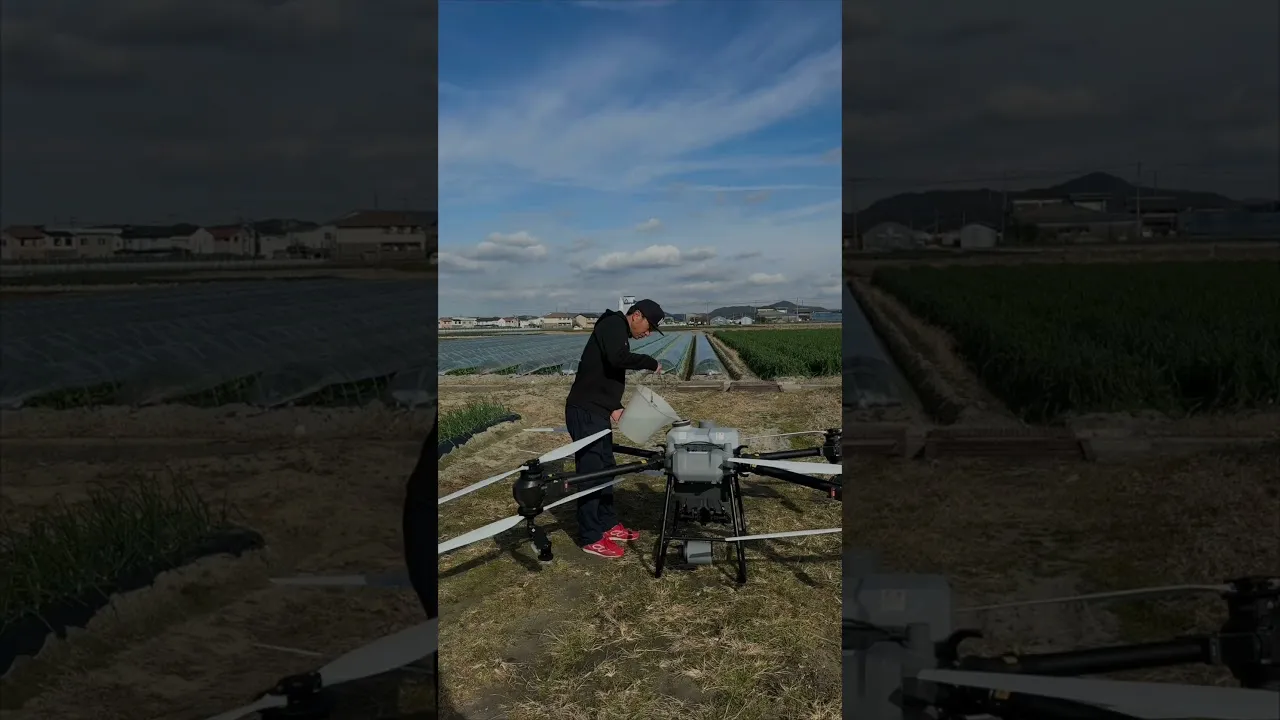

controlagriculture

Reinforcement Learning from Denoising Feedback

arXiv

arXiv:2605.25638v1 Announce Type: cross Abstract: Policy loss estimation remains a fundamental and long-standing challenge in reinforcement learning (RL) for diffusion language models (dLLMs). We introduce Reinforcement Learning from Denoising Feedback (RLDF), a novel training paradigm that leverages feedback obtained from rollout and training processes to facilitate accurate and efficient policy loss estimation. To balance the trade-off between computational efficiency and estimation effectiveness, RLDF optimizes the model toward the clipped clean state $\hat{x}_0$ from intermediate noisy states $x_t$, combined with weighted timestep sampling over $t$. Extensive experiments demonstrate that RLDF achieves consistent and substantial improvements in both performance and generalizability across two representative dLLM architectures, LLaDA and Dream, on multiple reasoning benchmarks. Our work lays a principled foundation for scalable reinforcement learning in diffusion language models. We

reinforcement-learning

SODE: Analyzing Social Dynamics in LLM Agents

arXiv

arXiv:2605.23949v1 Announce Type: cross Abstract: As Large Language Models (LLMs) evolve into interactive agents, understanding their behavioral alignment within human social dynamics becomes essential. While behavioral game theory offers a framework to study these interactions, previous work has predominantly relied on outcome-based metrics such as average scores. This focus overlooks the mechanisms that facilitate sustainable cooperation, as identical scores can be derived from vastly different strategies. To bridge this gap, we introduce SODE (Social Dynamics Evaluation), a framework that evaluates LLM agents across three evolutionary dimensions: Direct Reciprocity for strategy adaptation, Indirect Reciprocity for reputation sensitivity, and Group Dynamics for cooperative resilience. Applying SODE reveals systematic divergences: instruction-tuned models often exhibit "passive compliance" that renders them vulnerable to exploitation, while reasoning models prioritize short-horizon op

Teaching Through Analogies: A Modular Pipeline for Educational Analogy Generation

arXiv

arXiv:2605.24211v1 Announce Type: cross Abstract: Analogies help learners understand unfamiliar concepts by relating them to known concepts. Despite recent advances, large language models (LLMs) continue to struggle to generate analogies of comparable quality to those produced by humans. We present a modular pipeline for educational analogy generation, decomposing the task into four stages: source finding, sub-concept generation, explanation generation, and evaluation. Grounded in Structure Mapping Theory, the pipeline enables systematic, stage-by-stage analysis of how model choice and input configuration affect analogy quality. We evaluate 12 state-of-the-art LLMs across six model families on two datasets with structured sub-concept annotations (SCAR and ParallelPARC), alongside seven embedding models for closed-setting retrieval. Our results show that sub-concepts substantially improve explanation quality and closed setting retrieval precision but provide limited benefit in open-ende

Learning from Trials and Errors: Reflective Test-Time Planning for Embodied LLMs

arXiv

arXiv:2602.21198v3 Announce Type: replace-cross Abstract: Embodied LLMs endow robots with high-level task reasoning, but they cannot reflect on what went wrong or why, turning deployment into a sequence of independent trials where mistakes repeat rather than accumulate into experience. Drawing upon human reflective practitioners, we introduce Reflective Test-Time Planning, which integrates two modes of reflection: \textit{reflection-in-action}, where the agent uses test-time scaling to generate and score multiple candidate actions using internal reflections before execution; and \textit{reflection-on-action}, which uses test-time training to update both its internal reflection model and its action policy based on external reflections after execution. We also include retrospective reflection, allowing the agent to re-evaluate earlier decisions and perform model updates with hindsight for proper long-horizon credit assignment. Experiments on our newly-designed Long-Horizon Household benc

planning

Learning to Reason Efficiently with A* Post-Training

arXiv

arXiv:2605.24597v1 Announce Type: new Abstract: Many applications of large language models (LLMs) require deductive reasoning, yet models frequently produce incorrect or redundant inference steps. We frame natural language inference as a search problem where the final answer is the valid proof itself, requiring a reasoning procedure in which intermediate inferences are correct. Specifically, we investigate whether LLMs can learn to generate correct and efficient proofs with guidance from A* search -- an algorithm that guarantees an optimally efficient path to a goal. We explore two training techniques: supervised fine-tuning on execution traces from A* and reinforcement learning with A*-informed process reward models. Empirically, we find that Llama-3.2 models in the 1B--3B range benefit substantially from A* post training, going from near-zero accuracy to outperforming DeepSeek-V3.2 -- a much larger model. Our analysis uncovers a trade-off: while simple correctness rewards maximize ac

reinforcement-learning

A Taxonomy of Metacognitive Learning Scenarios in Professional Contexts: Integrating Systems Theory with Empirical Constraints

arXiv

arXiv:2605.24142v1 Announce Type: new Abstract: Metacognitive theories provide foundational frameworks for understanding self-regulated learning, yet they lack systematic integration into comprehensive scenario taxonomies capable of guiding AI-enhanced professional development interventions. Existing models inadequately specify how metacognitive components combine into distinct learning scenarios or how professionals progress from novice to expert functioning. A six-node open systems model, consisting of Environment, Input, Processes, Structures, Output, and Feedback, was developed by synthesizing four major theoretical frameworks. Combinatorial enumeration generated 216 mathematically possible learning scenarios. Four sequential constraint-based filters, including psychological plausibility, educational relevance, measurement feasibility, and intervention potential, informed by empirical workplace learning research, reduced this space to 24 priority scenarios. Five focal scenarios wer

AcroRL: Learning Aggressive Quadrotor Inversion using Bidirectional Thrust

arXiv

arXiv:2605.24301v1 Announce Type: new Abstract: Bidirectional thrust grants quadrotors a second equilibrium condition and increased control authority, expanding the envelope of possible aggressive maneuvers and enabling inverted flight, perching, and sensing. Prior geometric control approaches extend differential flatness through Hopf fibration-based attitude representations to support bidirectional thrust, but struggle with actuator saturation and motor reversal delay during inversions, requiring heuristic thrust posture scheduling and waypoint tuning. We propose a learning-based framework that modulates a constant reference trajectory to perform compact, position-constrained quadrotor inversions while remaining compatible with traditional trajectory generation and tracking across flight regimes. Separate policies are trained via reinforcement learning for nominal-to-inverted and inverted-to-nominal transitions. In JAX-based simulation, the proposed method achieves the lowest position

reinforcement-learningcontrol

Learning, Solving and Optimizing PDEs with TensorGalerkin: an efficient high-performance Galerkin assembly algorithm

arXiv

arXiv:2602.05052v3 Announce Type: replace Abstract: We present a unified algorithmic framework for the numerical solution, constrained optimization, and physics-informed learning of PDEs with a variational structure. Our framework is based on a Galerkin discretization of the underlying variational forms, and its high efficiency stems from a novel highly-optimized and GPU-compliant TensorGalerkin framework for linear system assembly (stiffness matrices and load vectors). TensorGalerkin operates by tensorizing element-wise operations within a Python-level Map stage and then performs global reduction with a sparse matrix multiplication that performs message passing on the mesh-induced sparsity graph. The Map and Reduce stages are co-designed inside PyTorch's autograd so that the assembly graph contains $O(1)$ nodes regardless of how the number of elements and local DoFs scale. We validate this $O(1)$-graph property by deploying TensorGalerkin downstream as i) a highly-efficient numerical

Optimizing Token Choice for Code Watermarking: An RL Approach

arXiv

arXiv:2508.11925v3 Announce Type: replace-cross Abstract: Protecting intellectual property on LLM-generated code necessitates effective watermarking systems that can operate within code's highly structured, syntactically constrained nature. In this work, we introduce CodeTracer, an innovative adaptive code watermarking framework underpinned by a novel reinforcement learning training paradigm. At its core, CodeTracer features a policy-driven approach that utilizes a parameterized model to intelligently bias token choices during next-token prediction. This strategy ensures that embedded watermarks maintain code functionality while exhibiting subtle yet statistically detectable deviations from typical token distributions. To facilitate policy learning, we devise a comprehensive reward system that seamlessly integrates execution feedback with watermark embedding signals, balancing process-level and outcome-level rewards. Additionally, we employ Gumbel Top-k reparameterization to enable gra

reinforcement-learning

Unlocking Apple's Private Cloud Compute: An Analysis of Privacy-Preserving Artificial Intelligence

arXiv

arXiv:2605.24239v1 Announce Type: cross Abstract: Many existing Artificial Intelligence (AI) solutions on mobile devices rely on an extensive collection of sensitive data, raising privacy concerns and often requiring storage for both context and model improvement. Apple's Private Cloud Compute (PCC) aims to address this by emphasizing mobile device integration and a privacy-first design. The central claim of PCC is that it does not store any user data and that user input and user accounts are unlinkable. While most of the PCC system specifications are public, compiled binaries add a layer of opaqueness. There are no reproducible builds, and there are no symbols within those binaries, creating potential discrepancies between the specification and what is shipped to the user. Additionally, the underlying models and interfaces for querying PCC are not openly accessible, limiting academic evaluation of model properties, such as accuracy. This poses a challenge in assessing whether a privac

Deep Learning-Enabled Prediction of Geoeffective CMEs Using SOHO and SDO Observations

arXiv

arXiv:2605.24748v1 Announce Type: cross Abstract: Understanding and forecasting the geoeffectiveness of a coronal mass ejection (CME) is crucial for protecting infrastructure in the near-Earth space environment and on Earth. In this study, we present a novel fusion model to forecast the geoeffectiveness of CME events. Our model combines convolutional neural networks for feature learning and a prediction network for feature fusion and event classification. The model is trained by observations from instruments including the Large Angle Spectroscopic Coronagraph (LASCO) on board the Solar and Heliospheric Observatory (SOHO) and the Atmospheric Imaging Assembly (AIA) and Helioseismic and Magnetic Imager (HMI) on board the Solar Dynamics Observatory (SDO). The trained model is then used to predict whether an Earth-reaching CME will cause a geomagnetic storm and/or the probability that the CME will cause such a storm. Experimental results based on a five-fold cross validation scheme demonstr

EvalVerse: Pipeline-Aware and Expert-Calibrated Benchmarking for Professional Cinematic Video Generation

arXiv

arXiv:2605.23271v1 Announce Type: new Abstract: The rapid evolution of generative video foundation models has propelled the field toward professional-grade cinematic synthesis. To achieve such demanding quality, the community transitions towards Reinforcement Learning (RL) and agentic workflows. However, reliable evaluation has emerged as a critical bottleneck. Existing benchmarks predominantly evaluate ''whether it is right'' (basic prompt-following) while fundamentally neglecting ''whether it is good'' (cinematic quality, acting, and aesthetics). Furthermore, current automated metrics lack the domain-specific rigor required to provide trustworthy signals, creating a severe credibility gap between human aesthetic perception and machine scoring. To bridge this gap, we introduce EvalVerse, a comprehensive, pipeline-aware, and expert-calibrated evaluation framework. We treat video generation assessment not merely as an engineering task, but as a core scientific problem: the systematic di

reinforcement-learningperception

PrivFusion: A Privacy-preserving Multi-Agent Framework for Harmonizing Distributed Datasets

arXiv

arXiv:2605.24249v1 Announce Type: new Abstract: The growing availability of clinical data has increased the use of machine learning, yet centralized data aggregation is often infeasible for sensitive health information. Federated Learning (FL) offers a distributed alternative, but its adoption is limited by substantial heterogeneity across institutional datasets, making harmonization a critical but frequently overlooked prerequisite for multi-site analytics. We introduce PrivFusion, a privacy-preserving multi-agent framework that automates the harmonization of structured datasets prior to federated training. PrivFusion uses agents to analyze local data, cluster semantically similar features across sites, and provide iterative transformation recommendations until alignment is achieved. Evaluation across four heterogeneous COVID-19 datasets demonstrates that PrivFusion effectively and efficiently harmonizes multi-site data while substantially reducing manual effort.

A Context Augmented Multi-Play Multi-Armed Bandit Algorithm for Fast Channel Allocation in Opportunistic Spectrum Access

arXiv

arXiv:2605.25391v1 Announce Type: new Abstract: We study the restless contextual multi-play multi-armed bandit (MP-MAB) problem for channel allocation in the opportunity spectrum access (OSA) scenario. Most existing MP-MAB methods are impractical for real-world OSA systems as they assume many ideal conditions, incur a heavy computational cost, and most importantly, ignore the impact of channel noise which is directly related to the quality of service. In this study, we embody this impact by modeling channel noise as a perturbation of the arm's reward function in MP-MAB. As there is an implicit correlation between channel state information and channel noise, we take the former as a context for MP-MAB to present the perturbation caused by the latter. We investigate two types of correlation between the context and the perturbation -- linear and nonlinear, and derive two index policies, respectively. These policies learn the correlations through a linear model and a neural network, and use

Contact: hello@roboverse.space